A vehicle left on private property without permission for over 72 hours is considered abandoned under Massachusetts law, and the property owner can have it removed. M.G.L. c. 90 s. 22C is the statute, and the process is different from a city or private-lot tow. Quick Tow Boston explains how the abandoned-vehicle process works in Massachusetts.
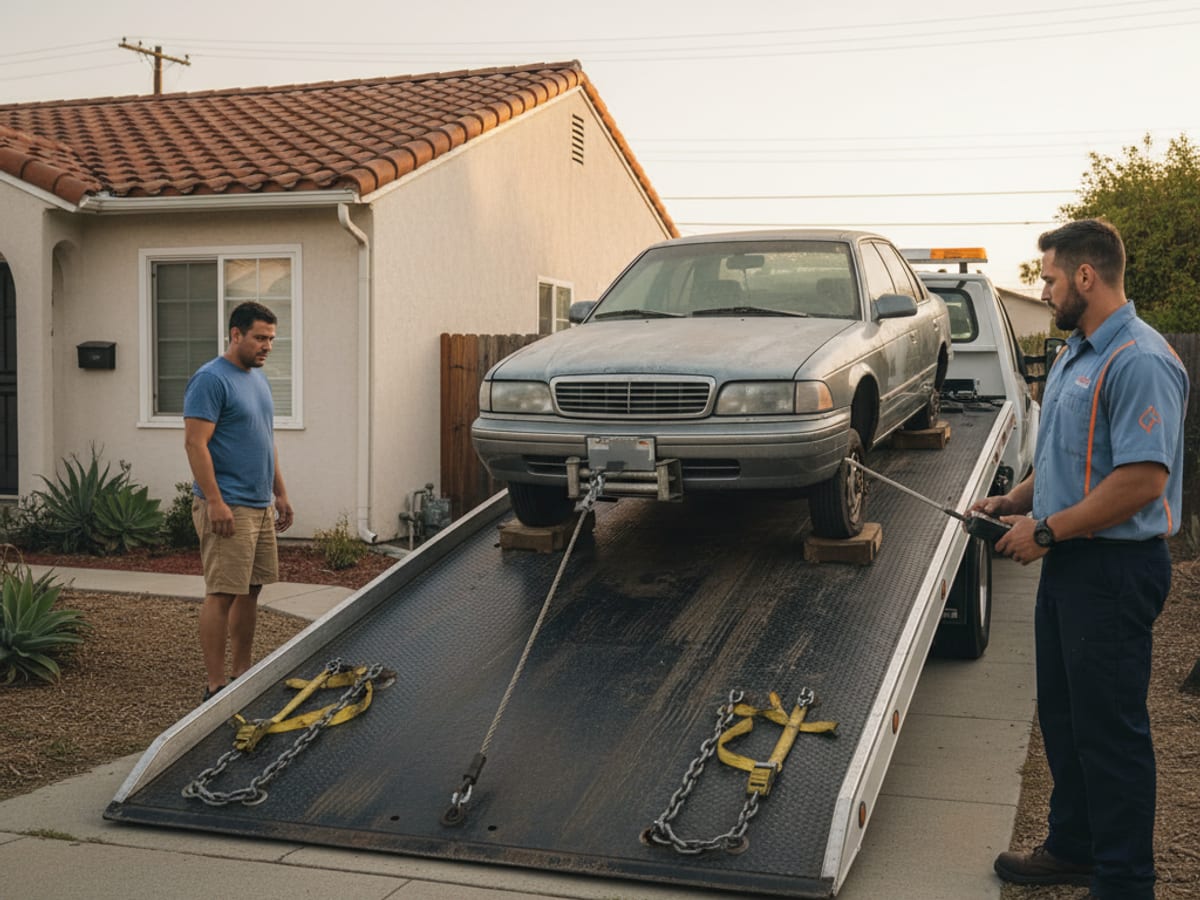
What makes a vehicle abandoned under c. 90 s. 22C
A vehicle is considered abandoned under M.G.L. c. 90 s. 22C when it is left on a way or on property without permission for over 72 hours, and it appears to be abandoned. The 72-hour clock starts when the vehicle is left, not when the property owner notices it.
Several signs suggest a vehicle is abandoned: flat tires, broken windows, missing plates, accumulated debris on the hood or roof, and an obviously long period of sitting in one spot. None of those signs is a legal test on its own, but together they support a 72-hour claim.
A vehicle that is parked with the owner’s permission, even for an extended period, is not abandoned under the statute. A neighbor who parks on a residential street during a long trip and updates the city is not abandoned. A tenant who parks a non-running car in a landlord’s lot with the landlord’s knowledge is not abandoned.
How a property owner removes an abandoned vehicle
The property owner’s process has three steps.
Notify the police. Before having the vehicle removed, the property owner must notify the local police department in writing. The notice identifies the vehicle, its location, and the date the owner noticed it was abandoned. The police may come out to confirm the vehicle is abandoned or to investigate.
Wait 72 hours. The 72-hour clock under c. 90 s. 22C runs from when the vehicle was left, not from the police notice. If the vehicle has been on the property for over 72 hours and the police have been notified, the property owner can have it removed.
Have it towed. The property owner arranges a tow through a licensed operator. The vehicle goes to the operator’s lot, and the operator follows the DPU maximums under 220 CMR 272.00. The free-release rule under M.G.L. c. 266 s. 120D does not apply to an abandoned-vehicle tow initiated by a property owner; the private-property rule applies to parking violations, while the abandoned-vehicle rule applies to long-stay vehicles.
A property owner who follows these three steps is protected from a civil claim by the vehicle’s registered owner.
What happens to the vehicle after removal
Once the vehicle is at the tow company’s lot, the registered owner has a window of time to retrieve it. The owner pays the tow fee and any storage, and the vehicle is released.
If the owner does not retrieve the vehicle, the tow company follows the garage-keeper process under M.G.L. c. 255 s. 39A. That process requires a 21-day notice sent by certified mail to the registered owner and any lienholder, and after 21 days the tow company may sell the vehicle at a public auction.
What this is not
The abandoned-vehicle process is not the same as the city’s boot-list or street-cleaning tow, and it is not the same as a private-property tow for a parking violation. Each regime has its own rules and its own defenses.
A property owner who is having a tenant’s car removed, or who is having a vehicle removed from a private lot under a posted parking rule, should confirm which regime applies before the tow. The wrong process can lead to a free-release claim or a wrongful-tow claim by the registered owner.
What neighbors should know
A neighbor who sees a vehicle that looks abandoned should not touch it, move it, or have it towed on their own. The right move is to notify the property owner, who can then notify the police and follow the 72-hour process.
A neighbor who lives on a city street and wants the city to remove an abandoned vehicle should call the city’s abandoned-vehicle hotline. The city has its own process for vehicles abandoned on public ways, and the city’s rules apply, not the property owner’s.
What Quick Tow Boston can and cannot do
Quick Tow Boston does not initiate abandoned-vehicle removals. We connect drivers with independent local operators for new tows. If a property owner has an abandoned vehicle to remove, the operator handles the tow under the property owner’s process, and the operator quotes the job before the truck rolls.
A driver whose car was towed as abandoned and who believes the tow was wrongful should contact the tow company, the property owner, and the local police. The Massachusetts Attorney General’s office handles consumer complaints about tows.
Frequently asked questions
What is the 72-hour rule under c. 90 s. 22C? A vehicle left on private property without permission for over 72 hours is considered abandoned under Massachusetts law, and the property owner can have it removed after notifying the police.
Does the free-release rule apply to an abandoned-vehicle tow? Not the way it does to a parking-violation tow. The free-release rule under M.G.L. c. 266 s. 120D applies to private-property parking-violation tows. An abandoned-vehicle tow follows c. 90 s. 22C and the garage-keeper process.
Can a neighbor have an abandoned vehicle removed? Not directly. The right move is to notify the property owner, who can then notify the police and follow the 72-hour process. A neighbor on a city street should call the city’s abandoned-vehicle hotline.
Does Quick Tow Boston handle abandoned-vehicle removals? We connect drivers with independent local operators for new tows. A property owner can arrange an abandoned-vehicle tow through an operator, and the operator follows the property owner’s process.
When to call us
Call when a property owner needs an abandoned vehicle removed and a real operator, not a guess at which regime applies. Quick Tow Boston connects drivers and property owners with independent local operators across Greater Boston, and the operator quotes the price before anyone is dispatched. Calls are recorded after a notice. Reach the dispatch line at (857) 858-5057.