The Braintree Split ties together I-93, Route 3, and US-1 on the South Shore, and it is one of the busiest junctions in Massachusetts. A breakdown at the Split backs up traffic for miles in every direction, and a crash can shut the whole interchange for hours. Quick Tow Boston explains how breakdowns and recovery work at the Braintree Split.
What the Braintree Split is
The Braintree Split is the interchange where I-93, Route 3, and US-1 come together on the South Shore. I-93 runs north-south through Braintree, Route 3 runs south toward Cape Cod, and US-1 runs northeast toward the South Shore and the North Shore.
The interchange sees heavy commuter traffic in both rush hours, and the summer adds Cape Cod traffic that backs up Route 3 southbound on Friday afternoons and northbound on Sunday afternoons. A breakdown at the Split in any of those windows can shut lanes and back up traffic for miles.
The State Police run the traffic management on the state highways that feed the Split, and the operator works under their direction. The MassDOT Highway Assistance Patrol also patrols the I-93, I-95, and Route 128 corridors during weekday rush hours to clear minor incidents.
What kinds of breakdowns happen at the Split
The Split sees a mix of light-duty and heavy-duty breakdowns.
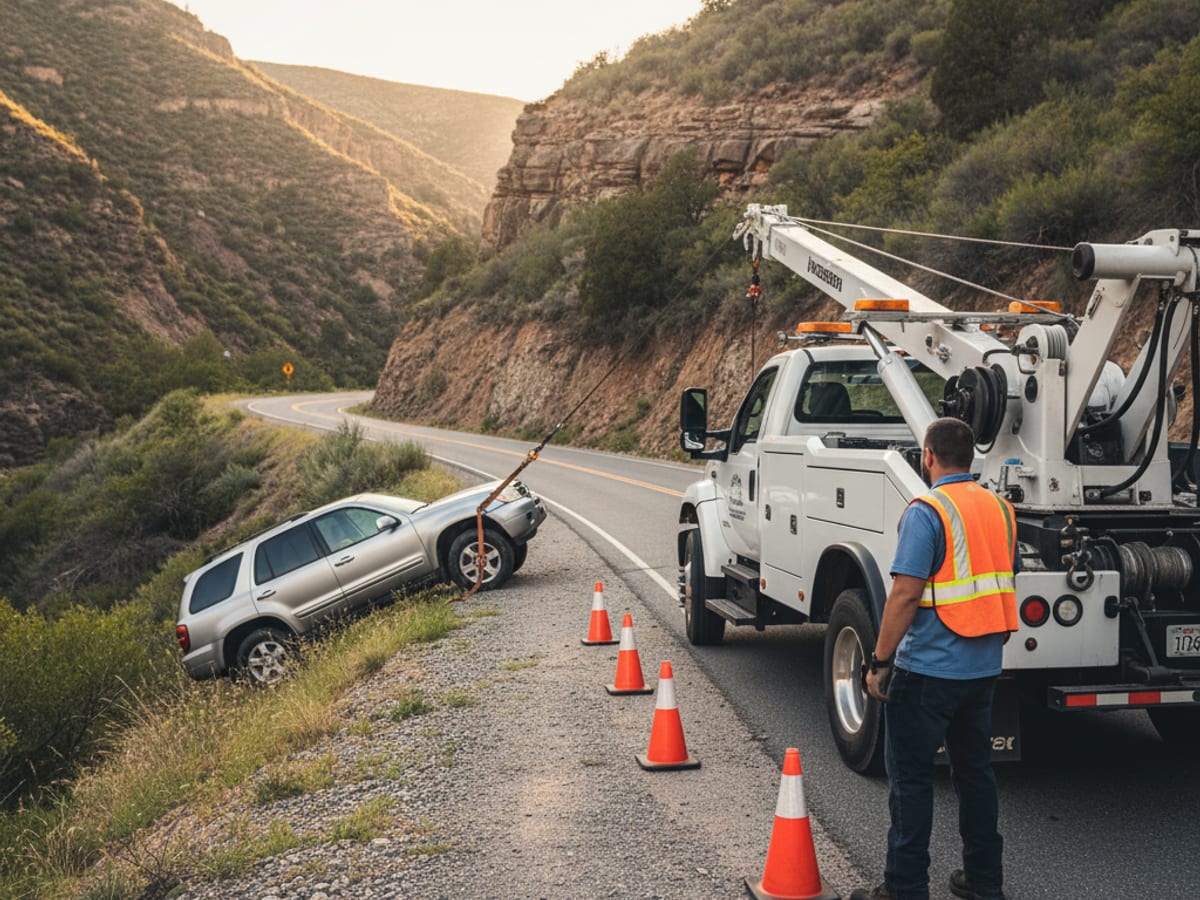
Sedans and SUVs that overheat, run out of gas, or have a dead battery are the steady stream. The operator uses a wheel-lift or a flatbed to clear the car to a safe spot, and the car is towed to a shop or to the driver’s house.
Box trucks and tractor-trailers that break down at the Split are a heavier problem. A tractor-trailer with a stuck transmission or a blown tire needs a heavy-duty wrecker with a boom and an underlift, and the recovery can shut a lane for an hour or more.
Crashes at the Split can involve several vehicles and need a coordinated response. The State Police set the timing for the recovery, and the operator works under their direction.
How the operator handles a Split breakdown
The first step is to reach the scene quickly. The operator dispatches from a position that allows fast access to the interchange, and the dispatch line stays open at any hour.
The second step is to secure the scene. The operator sets flares or cones, positions the wrecker to block live traffic, and coordinates with the State Police if the breakdown is on a state highway.
The third step is to clear the vehicle. A sedan or SUV is usually cleared with a wheel-lift to a safe spot on the shoulder or an off-ramp. A box truck or tractor-trailer needs a heavy-duty wrecker with the right equipment, and the recovery is slower.
The fourth step is to document the scene. The operator takes photos, notes the time and the location, and prepares the paperwork for the driver and the State Police.
What to do if you break down at the Split
A driver who breaks down at the Braintree Split should follow these steps.
Pull to the right shoulder. The shoulder is the safe spot. A driver who can coast to the shoulder should do so, set the hazards, and wait for help.
Stay in the car. The Split is a high-speed interchange with live traffic in every lane. A person walking on the Split is at risk. Stay in the car with the seatbelt on and the hazards on.
Call for help. The dispatch line takes calls at any hour. The operator coordinates with the State Police when the breakdown is on a state highway.
Do not try to cross the lanes. Crossing live traffic at the Split is a serious risk. Wait for the operator and the State Police to arrive.
How to avoid a Split breakdown
Five things reduce the risk of a Split breakdown.
Check the tire pressure. Tires that are underinflated overheat at highway speed and can blow out. The right pressure is on the door jamb sticker.
Check the battery. A weak battery shows it first at highway speeds with the air conditioning running. A load test before a long trip is a few minutes at any shop.
Check the fluid levels. Oil, coolant, and transmission fluid all need to be at the right level. A low coolant level is a common cause of summer breakdowns at highway speeds.
Keep the fuel tank above a quarter. Running out of gas on the Split is a fast way to back up traffic. The right habit is to refill before the tank drops below a quarter.
Avoid peak hours. The Split is busiest from 7:00 to 9:00 AM and from 4:00 to 6:00 PM on weekdays, and on Friday afternoons and Sunday afternoons in the summer. A driver who can shift the trip outside those windows avoids the worst of the traffic.
How Quick Tow Boston helps at the Split
Quick Tow Boston connects drivers with independent local operators who handle Split breakdowns and recoveries. The operator quotes the price before the truck rolls, and the dispatch runs at any hour.
For a sedan or SUV, the operator uses a wheel-lift or a flatbed. The job is a regular tow.
For a box truck or tractor-trailer, the operator uses a heavy-duty wrecker with a boom and an underlift. The job is a heavy-duty recovery, and the operator quotes it as such.
For a crash with scene management, the operator coordinates with the State Police. The job is a recovery, and the operator quotes it based on the work.
Frequently asked questions
What roads converge at the Braintree Split? I-93, Route 3, and US-1 all converge at the Split. The interchange sees heavy commuter traffic and summer Cape Cod traffic.
Who manages traffic at the Split? The State Police run the traffic management on the state highways that feed the Split. The MassDOT Highway Assistance Patrol patrols during weekday rush hours.
What should I do if I break down at the Split? Pull to the right shoulder, stay in the car with the hazards on, and call for help. Do not cross the live lanes.
Does Quick Tow Boston handle Split recoveries? We connect drivers with independent local operators who run light-duty and heavy-duty wreckers. The operator quotes the recovery before the truck rolls.
When to call us
Call when a vehicle is disabled at the Braintree Split or anywhere on the South Shore and needs a local operator sent. Quick Tow Boston connects drivers with independent local operators across Greater Boston, and the operator quotes the price before anyone is dispatched. Calls are recorded after a notice. Reach the dispatch line at (857) 858-5057.