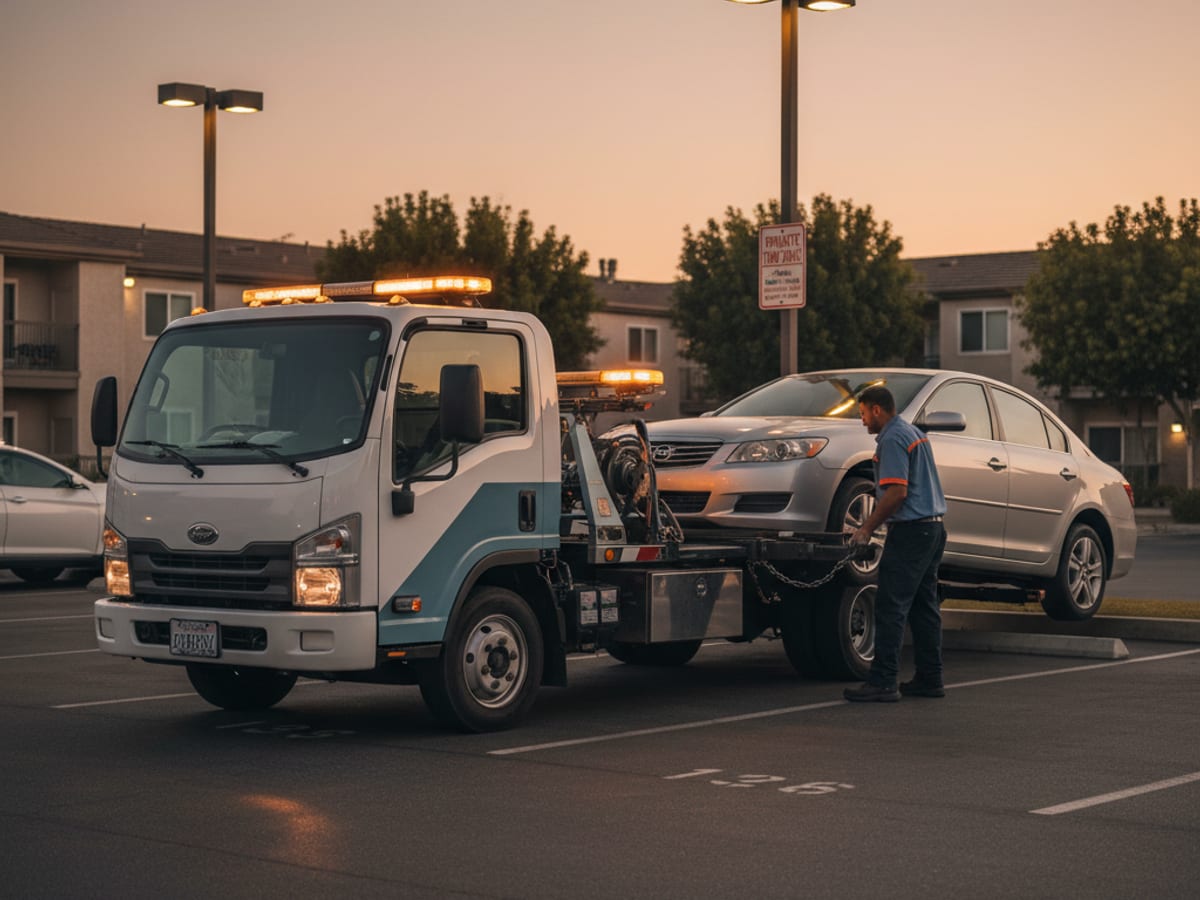
Massachusetts puts real conditions on a private-property tow, and if the company skips any of them, it has to give the car back with no charge. Before a car can be towed from an apartment, retail, or commercial lot, M.G.L. c. 266 s. 120D requires posted signs at every entrance and exit, written notice to the local police, and charges no higher than the state DPU maximums. Check those three things first.
What the statute actually requires
M.G.L. c. 266 s. 120D governs a trespass tow, meaning a car removed from private property without the owner’s consent. The law is specific, and each requirement is a place a wrongful tow can fall apart.
First, the property must post “No parking” signs at all entrances and exits. A single sign buried in a corner does not meet this.
Second, before the car is removed, the property owner must notify the local police in writing. In Boston that goes to the Police Commissioner. The notice has to identify the address the car was taken from, where it is going, the plate number, the owner’s name, and the towing company.
Third, the tow can only charge the rates set by the DPU under 220 CMR 272, the same maximums that apply to a police-ordered tow.
The free-release rule
Here is the part most drivers never hear. If the towing company fails any provision of c. 266 s. 120D, the statute says it must release the vehicle with no removal charge and no storage charge.
So if there was no sign at the entrance you used, or the police were never notified in writing, or the company tried to charge more than the DPU cap, you have grounds to demand the car back for free. Say so plainly when you call, and ask the company which requirement it met. This is a statute, not a courtesy.
What it can cost when the tow was proper
When the tow followed the rules, the price is capped by 220 CMR 272 and is not negotiable upward. The base tow, up to five miles, is a maximum of $132, which already includes the first hour of service or waiting time. Each mile past five is capped at $4.40.
Storage is capped at $35 per 24-hour period at a lighted lot enclosed by a secure fence at least six feet high, or $17.50 for other outdoor storage. There is no gate fee and no after-hours fee anywhere in the regulation. A bill that adds either one is charging you for something the state does not allow.
Where these tows happen in Greater Boston
Private-lot tows cluster where parking is scarce and turnover is high. Apartment lots in Allston, Brighton, and Mission Hill fill with student cars, especially around the September 1 lease turnover. Retail and restaurant lots across the region tow cars left by people who walked somewhere else.
Cambridge and Somerville, two of the densest cities in New England, generate heavy private-lot enforcement alongside their strict resident permits. Wherever it happens, the same statute applies, because c. 266 s. 120D is state law, not a Boston ordinance.
How to respond in the moment
Find the sign first. Photograph every entrance and note whether a “No parking” sign is actually posted where you drove in. Then call the company on the sign and ask two questions: did you notify the police in writing before towing my car, and what are you charging.
If any answer shows a gap, cite the free-release provision of c. 266 s. 120D. If the company still refuses, the local police for that jurisdiction hold the written notice the law requires, so they can confirm whether it was ever filed.
Frequently asked questions
Can a lot tow my car without any signs? Not lawfully. M.G.L. c. 266 s. 120D requires “No parking” signs at all entrances and exits. A tow from an unposted lot may have to be released with no charge.
How much can a private-property tow charge me? No more than the DPU maximums in 220 CMR 272: up to $132 for the first five miles and up to $35 per day of storage. There is no gate or after-hours fee.
What does the free-release rule mean? If the towing company fails any requirement of c. 266 s. 120D, the statute requires it to release your vehicle with no removal or storage charge.
Who do I contact if the company will not release the car? The local police for that jurisdiction, because the law requires the property owner to file written notice with them before the tow. They can confirm whether that happened.
When to call us
Call when the car is released but cannot be driven, or when it broke down and needs a local operator sent. Quick Tow Boston connects drivers with independent operators across Greater Boston, with the price quoted before dispatch. Calls are recorded after a notice. Reach the dispatch line at (857) 858-5057, or read our guide to private-property towing.