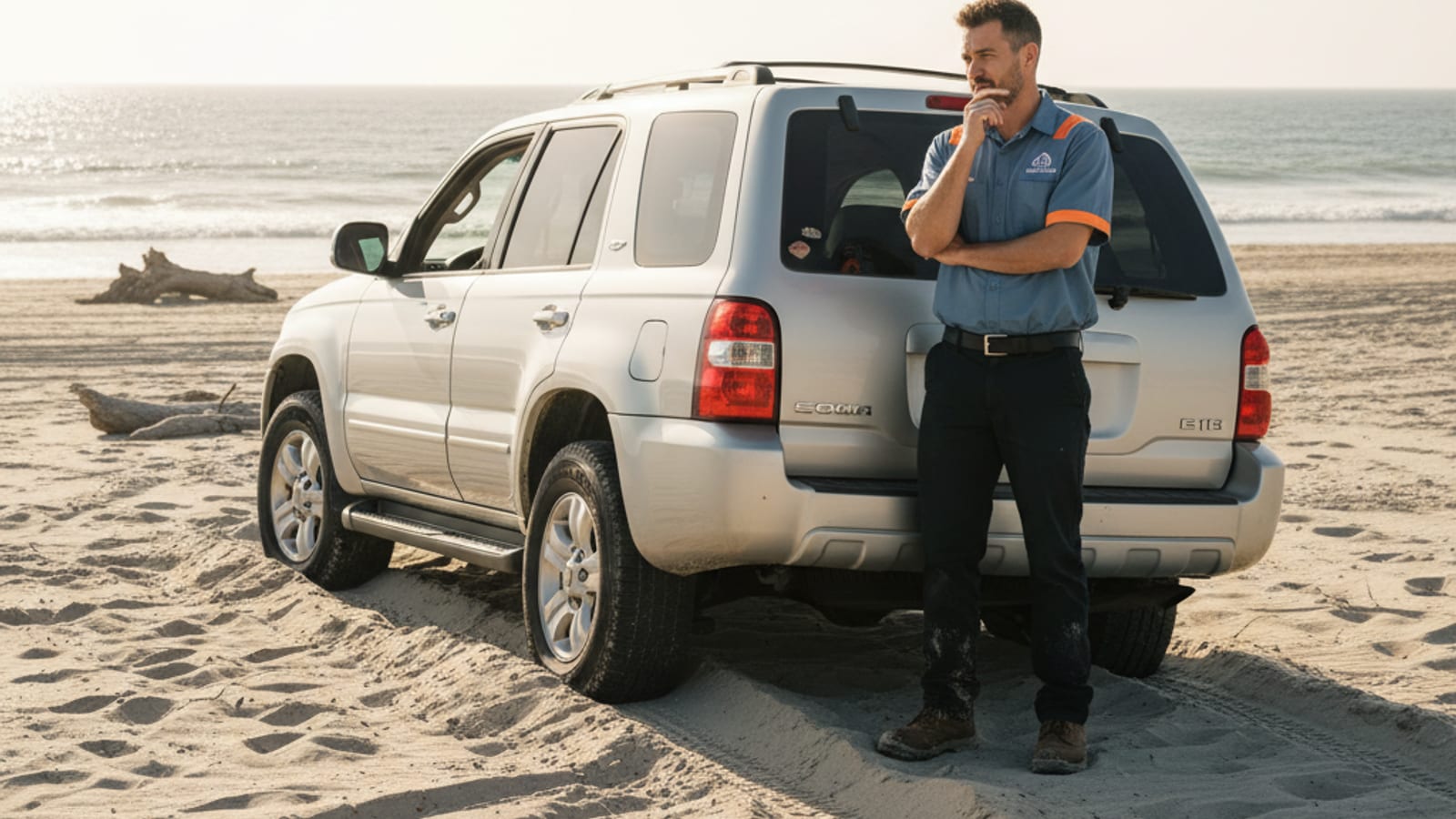
Boston averages about 15 king-tide flood events a year, and they concentrate in the Seaport, East Boston, Morrissey Boulevard in Dorchester, and the North End waterfront. A car caught in a coastal flood is a different recovery from a stalled car: salt water in the electrical system, a soaked interior, and a recovery that has to happen while the tide is still out. Quick Tow Boston explains what to do before, during, and after a coastal flood.
Why Boston floods the way it does
King tides are the highest tides of the year, and they happen when the sun and the moon align to pull extra water up the coast. Boston Harbor sees about 15 of these events a year, with the biggest clusters in the fall and the early winter.
Climate change is making the problem worse. Sea level in Boston Harbor has risen about eight inches since 1950, and the rate is accelerating. A king tide that would have just lapped the curb twenty years ago now covers the curb and gets into the storm drains.
The flood hotspots line up with the low-lying coastal edges: the Seaport and its side streets, East Boston’s Central Square and the streets near the water, Morrissey Boulevard in Dorchester, and the North End waterfront near the harbor. A driver who lives or parks in those zones has to think about tide times the way a homeowner on the coast does.
What to do before a king tide
Check the tide calendar. NOAA publishes the Boston Harbor tide calendar, and the media cover the highest tides of the year. A driver who knows a king tide is coming can move the car to higher ground before the tide peaks.
Move the car off the low ground. A car parked on a low street or in a low parking lot during a king tide is at risk of standing water in the engine bay, soaked upholstery, and salt damage to the undercarriage. The move takes ten minutes, and it saves the car.
Cover the undercarriage if the car has to stay. A waterproof car cover is the cheap option. A better option is to find higher ground, even if it means parking a few blocks away and walking.
What to do during a flood
A car caught in floodwater is a dangerous situation. The right moves are:
Do not drive into standing water. Six inches of moving water can stall a car, and a foot of moving water can carry a car away. The rule is turn around, don’t drown.
Get out of the car if the water is rising. A car that is sinking or filling with water is a risk to the people inside. Get out, get to high ground, and call for help.
Stay away from the water after the car is stranded. Floodwater is salty, dirty, and electrically charged from submerged outlets and infrastructure. Standing in it is a health risk.
Call for help. The dispatch line takes calls at any hour. The operator coordinates with the local police when the car is on a flooded public street, and the operator works under their direction.
How the operator handles a flooded car
A flooded-car recovery is different from a regular tow.
The operator uses a flatbed or a winch to pull the car out without driving it through more water. Driving a flooded car can push water into the engine and damage the electrical system further.
The car goes to a shop, not back to the owner’s house, because a flooded car needs an electrical inspection before it is safe to drive. Salt water is corrosive, and a soaked interior is a mold risk.
The operator’s quote reflects the extra time and equipment. A flooded-car recovery is not a regular tow, and the operator will not quote it as one.
Where the worst hotspots are in Greater Boston
The Seaport is the biggest hotspot. The Innovation District sits on fill that was placed in the harbor over a century ago, and the lowest blocks flood on every high king tide. The area around the Boston Convention Center, the residential side streets, and the parking garages near the waterfront all see flooding.
East Boston’s Central Square and the streets near Maverick station flood on king tides, and the flooding often extends to the parking lots and the side streets. A driver who parks in the surface lots near the square has to think about tide times.
Morrissey Boulevard in Dorchester is the longest continuous flood zone in the city, running along the harbor edge. A car parked on the boulevard during a king tide is at real risk.
The North End waterfront, near the harbor and along Commercial Street, sees flooding that gets into the surface lots and the lower garages.
What Quick Tow Boston does during a flood
Quick Tow Boston connects drivers with independent local operators who handle flooded-car recoveries. The operator quotes the price before the truck rolls, and the dispatch runs at any hour.
For a flooded car, the operator pulls the car out with a flatbed or a winch and delivers it to a shop of the driver’s choice. The operator does not start the car, because a flooded engine can be damaged by being turned over.
For a car that needs a tow during a flood but is not itself flooded, the operator uses the regular tow equipment. The job is a regular tow, and the operator’s quote reflects that.
Frequently asked questions
How often does Boston flood? Boston Harbor sees about 15 king-tide flood events a year, concentrated in the fall and early winter. Climate change is making the problem worse.
Where are the worst flood hotspots? The Seaport, East Boston’s Central Square, Morrissey Boulevard in Dorchester, and the North End waterfront are the worst hotspots. Lower parking garages near the water flood regularly.
Can I drive through a flooded street? No. Six inches of moving water can stall a car, and a foot can carry it away. The rule is turn around, don’t drown.
What do I do with a flooded car? Call for a flatbed or a winch-out. Do not start the car. Have it towed to a shop for an electrical inspection before driving it again.
When to call us
Call when a car is stranded in a flood or stuck in standing water and needs a recovery operator with the right equipment. Quick Tow Boston connects drivers with independent local operators across Greater Boston, and the operator quotes the price before anyone is dispatched. Calls are recorded after a notice. Reach the dispatch line at (857) 858-5057.