Heat kills more car batteries than cold does. A Boston summer in the 90s, with the engine bay running even hotter, can finish off a battery that survived the winter. The battery that started the car in April may not start it in August. Quick Tow Boston explains why heat is hard on batteries, what to do before the August heat peaks, and how to handle a no-start in the summer.
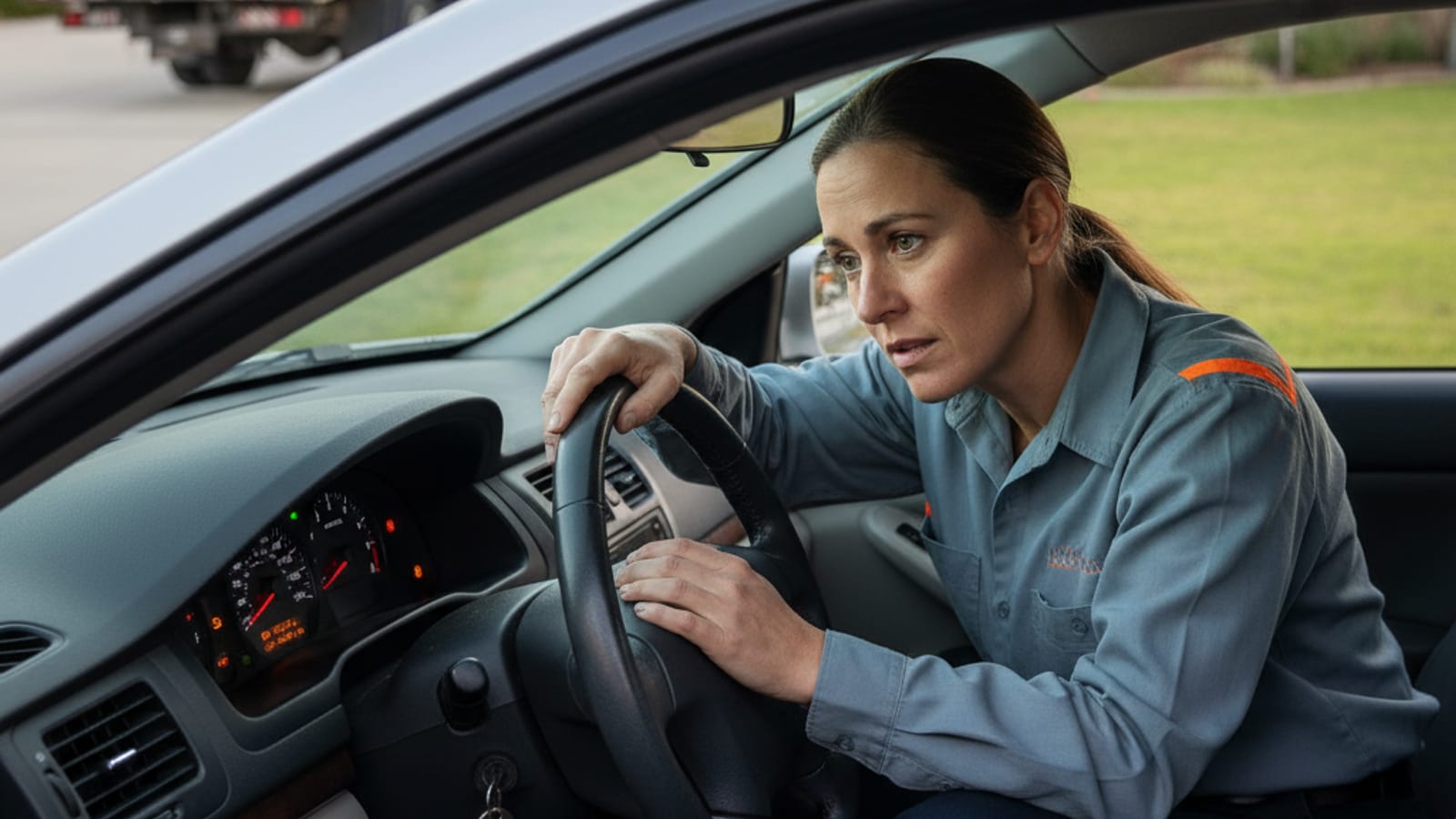
Why heat kills batteries
A car battery is a chemical reaction in a box, and heat speeds up the reaction. The faster the reaction runs, the more the battery’s internal plates corrode, and the more water evaporates from the electrolyte. Over time, the battery loses capacity, and the first sign is a slow start on a hot day.
Cold weather gets the blame because a cold engine is harder to crank, and a weak battery shows it first in winter. But the heat is what weakened the battery in the first place. A battery that lasted four Boston winters and died in the fifth probably died from accumulated heat damage, not from the cold snap that finally exposed it.
Boston summers run 80 to 95 degrees during the day, and engine bay temperatures under the hood can hit 130 to 150 degrees in traffic. A battery mounted near the front of the engine bay absorbs that heat directly. A battery mounted in the trunk or under the rear seat runs cooler.
How to prep the battery for the summer
Three things make a Boston summer easier on the battery.
Load test. A load test at a service shop tells you whether the battery is still strong. The test takes ten minutes, and most shops do it for free. A battery that fails the load test is one hot day away from a no-start, and replacing it before the trip saves the tow.
Clean the terminals. Corroded terminals are a common cause of summer no-starts. The corrosion looks like a white or blue-green crust on the battery posts. A wire brush and a baking soda and water paste clean it off in minutes. A protective spray on the cleaned terminals slows the corrosion from coming back.
Check the hold-down. A battery that vibrates in its tray shakes the internal plates and shortens the battery’s life. The hold-down clamp should be tight, and the battery should not move when the engine runs.
What to do when the car will not start on a hot day
A no-start on a hot day is usually one of three things: a dead battery, a bad starter, or a fuel-system problem. The right move is to try the simple things first.
Check the headlights. Headlights that are dim or that go out when the engine cranks are a sign of a weak battery. Headlights that stay bright are a sign that the battery is fine and the problem is the starter or the fuel system.
Listen to the engine. A clicking sound with no crank is a weak battery or a bad connection at the battery terminals. A single loud click is a bad starter. A crank with no start is a fuel-system problem.
Try a jump start. A jump start from another car or a portable jump starter can get a weak-battery car running. The car should run for at least 20 minutes after the jump to put some charge back into the battery.
Call for help. If the jump start does not work, the right move is to call for an operator. The operator can try a jump, a battery swap, or a tow to a shop, depending on the situation.
How an operator handles a summer no-start
A summer no-start call usually ends one of three ways.
Jump start. The operator arrives with a portable jump starter, connects the battery, and starts the car. The job takes five to ten minutes, and the operator quotes it as a roadside service.
Battery swap. Some operators carry common battery sizes and can swap a battery on the spot. The job takes 20 to 30 minutes, and the operator quotes it as a battery replacement.
Tow. If the jump start does not work or the battery is not the problem, the operator tows the car to a shop. The operator quotes the tow as a regular tow, and the shop handles the diagnosis.
The operator quotes the job before the truck rolls, so the driver knows the price before committing.
Where summer battery calls happen in Greater Boston
The calls come from everywhere, but a few places generate more than their share.
Office parks along Route 128. The commuter cars sit in the sun all day, and the batteries cook.
The Seaport parking garages. The garages are hot in summer, and the cars that sit in them all day lose charge to the heat.
Hospital garages around the Longwood medical area. The cars that sit through 12-hour shifts in hot garages see the same heat damage.
The Cape Cod ferry terminals. The cars that wait in line on a hot summer day cook from underneath.
What Quick Tow Boston does during the summer
Quick Tow Boston connects drivers with independent local operators who handle summer no-starts. The operator quotes the price before the truck rolls, and the dispatch runs at any hour.
For a jump start, the operator arrives with a portable jump starter and gets the car running. The job is a roadside service, and the operator’s quote reflects that.
For a battery swap, some operators carry common sizes and can do the swap on the spot. The operator’s quote covers the battery and the labor.
For a tow to a shop, the operator uses a flatbed or a wheel-lift. The job is a regular tow, and the operator’s quote covers the mileage.
Frequently asked questions
Why does heat kill batteries? Heat speeds up the chemical reaction inside the battery, which corrodes the internal plates and evaporates the electrolyte. A battery that survives Boston winters often dies from accumulated heat damage.
How often should I test my battery? A load test before the summer and a load test before the winter is a reasonable schedule. A battery that fails the load test is one bad day away from a no-start.
Can a jump start fix a dead battery? A jump start gets the car running, but it does not recharge a dead battery. The car should run for at least 20 minutes after the jump, and a battery that does not hold charge should be replaced.
Does Quick Tow Boston sell batteries? Some operators carry common battery sizes and can swap on the spot. The operator confirms availability when quoting.
When to call us
Call when the car will not start on a hot day and needs a jump, a battery swap, or a tow to a shop. Quick Tow Boston connects drivers with independent local operators across Greater Boston, and the operator quotes the price before anyone is dispatched. Calls are recorded after a notice. Reach the dispatch line at (857) 858-5057.