Massachusetts law gives a private-property tow several real defenses, and the strongest of them is the free-release rule under M.G.L. c. 266 s. 120D. If a tow company fails any requirement of the law, it must release the vehicle with no removal or storage charge. The DPU rate cap under 220 CMR 272.00 is the second defense. The combination is the right way to dispute a tow that did not follow the rules.
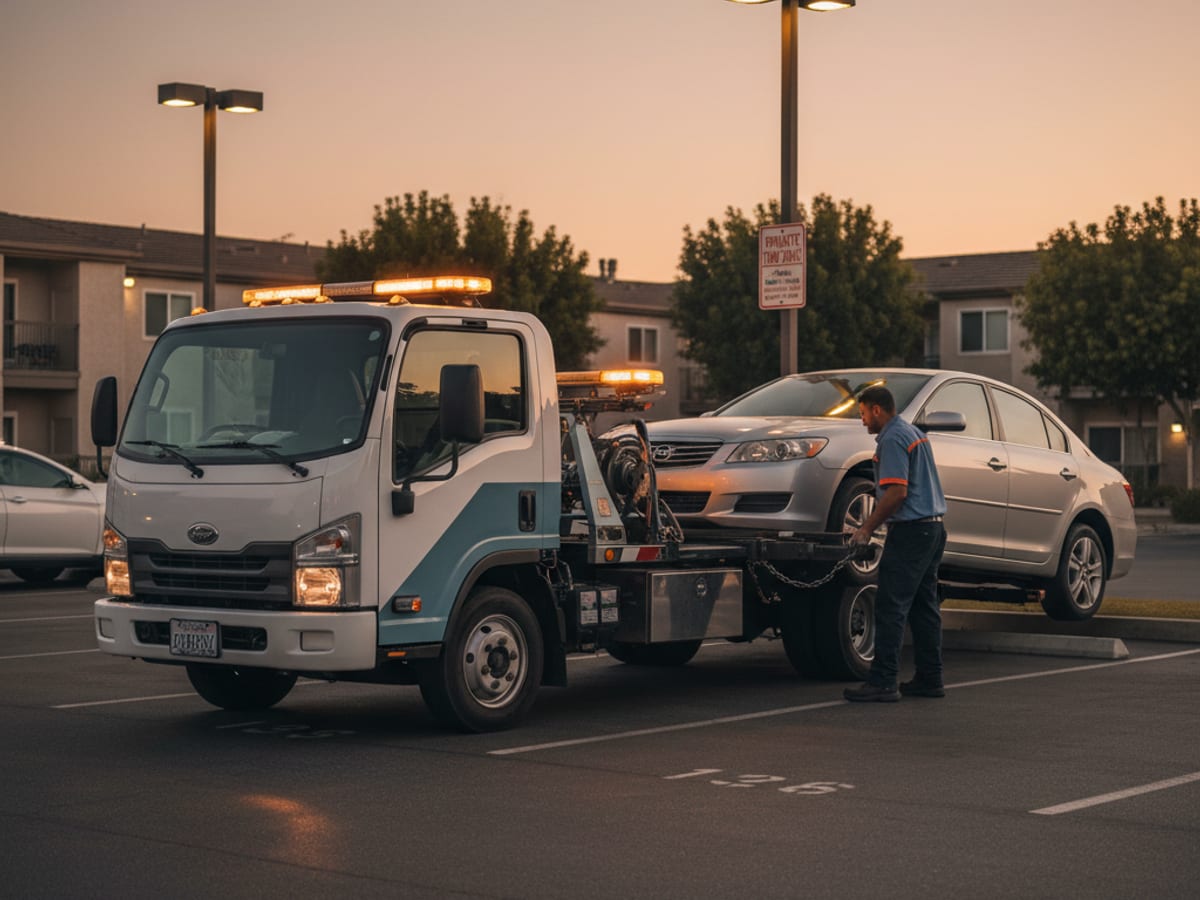
The three regimes, and which one to dispute
Almost every dispute turns on which towing regime the tow fell under. They are not the same.
A City of Boston tow. Police tows, snow-emergency tows, street-cleaning tows, and boot-list tows inside Boston city limits run through the city and land at its own lot at 200 Frontage Road. The city’s own process handles disputes through the city.
A suburban municipal impound. Cambridge, Somerville, Quincy, and every other town runs its own process and its contracted tow company. Disputes go through that town’s process, not the city’s.
A private-property or police-ordered non-consensual tow. Governed by M.G.L. c. 266 s. 120D and priced at the state DPU maximum rates in 220 CMR 272.00. This is the regime where the free-release rule applies, and where most disputes live.
The first step in any dispute is to identify which regime applies.
The free-release rule under M.G.L. c. 266 s. 120D
The statute spells out the requirements for a private-property tow. Three of them matter most.
Posted signs. “No parking” signs must be posted at all entrances and exits to the property. A sign at one entrance is not enough. A sign that is too small, too faded, or wrong-height to be visible from the parking space does not count. A driver who can show that the signs were missing at the entrance they used has a defense.
Written police notice. Before removing the vehicle, the property owner must notify the local police chief in writing. A verbal call or an after-the-fact report does not satisfy the statute. A driver who can show that no written notice was filed has a defense.
Posted rates at the DPU maximum. The tow must charge the rates in 220 CMR 272.00, which caps a base tow at $132 for the first five miles and $4.40 a mile after, with storage at $35 per 24 hours at a fenced-lit lot or $17.50 at other outdoor storage. A bill that exceeds those rates, or that adds a gate fee or after-hours fee that does not exist in the regulation, has a defense.
If the company failed any one of those three, the statute says the car must be released with no removal or storage charge. That is a hard rule, and it is the strongest single defense a driver has.
The DPU rate cap
The DPU rates in 220 CMR 272.00 are maximums, not the company’s prices. A driver who is billed above the maximums can challenge the overage.
The current maximums are:
- Base tow, up to five miles: $132, including one hour of service or waiting time
- Each mile over five: $4.40
- Storage at a lighted outdoor lot enclosed by a 6-foot fence: $35 per 24 hours
- Storage at other outdoor storage: $17.50 per 24 hours
- No gate fee, no after-hours fee, no fuel surcharge in the regulation
A bill that adds a gate fee, an after-hours fee, or any other surcharge not in the regulation is overcharging, and the driver can dispute it.
What to gather before you dispute
To dispute a tow effectively, gather the following before you call or write.
The receipt. The tow company’s receipt or invoice, with the date, the time, the pickup spot, the drop-off spot, the charges, and the operator’s name.
Photos of the signs. Photographs of every entrance to the property, taken at the time of the tow if possible. Photos that show missing, faded, or undersized signs are the strongest evidence.
A copy of the police log. A public records request to the local police department will show whether a written notice was filed before the tow. If no notice was filed, the free-release rule applies.
Your timeline. The time you parked, the time you returned, and the time the tow was performed. A tow performed within minutes of parking on a property open to the public is harder to justify than one performed after a clear posted-period violation.
The DPU rate sheet. The current 220 CMR 272.00 rates, available on the Mass.gov website and Cornell LII.
How to raise the dispute
The first move is to call the tow company’s office and ask for the dispute process. Many companies have a manager who handles disputes by phone. State the specific failure under c. 266 s. 120D, or the specific overcharge above the DPU maximums, and ask for a release or a corrected bill.
If the company refuses, the next move is a written dispute. Send a letter or an email that lays out the facts, attaches the photos and the police log, cites c. 266 s. 120D and 220 CMR 272.00, and demands release with no charge or a corrected bill.
If the company still refuses, the next move is the state Attorney General’s office. The AG’s consumer complaint process handles towing disputes, and a complaint that includes the photos, the police log, and the rate comparison is a record the AG can use.
For a DPU rate overcharge specifically, the DPU’s Transportation Division is the regulator. A complaint to the DPU can result in an audit and a refund.
When Quick Tow Boston can help
Quick Tow Boston does not handle disputes directly. We connect stranded drivers with independent local operators for new tows. If the tow has already happened and the car is in a yard, we point you to the city or town that runs the impound, and we point you at the statutes that govern the dispute.
For a City of Boston tow, the plate lookup is at cityofboston.gov/towing/search and the city’s published fees apply.
For a suburban municipal impound, the police department or the town’s website is the right starting point.
For a private-property dispute, M.G.L. c. 266 s. 120D and 220 CMR 272.00 are the statutes to cite.
Frequently asked questions
Can I get my car back without paying if the signs were missing? Possibly. Under M.G.L. c. 266 s. 120D, a private-property tow that fails any requirement of the law must release the car with no removal or storage charge. Missing or undersized signs are a failure.
Can a tow company charge me a gate fee? No. 220 CMR 272.00 sets the maximum rates and includes no gate fee. A bill that adds one is overcharging, and the overage is disputable.
Where do I file a complaint? The state Attorney General’s office handles consumer complaints against tow companies. The DPU’s Transportation Division is the regulator for rate complaints.
Does Quick Tow Boston handle disputes? No. We connect drivers with independent local operators for new tows. We can point you to the statutes that govern a dispute, but the dispute itself is between the driver and the tow company.
When to call us
Call when the next tow happens, not when a tow is already in dispute. Quick Tow Boston connects drivers with independent local operators across Greater Boston, and the operator quotes the price before anyone is dispatched. Calls are recorded after a notice. Reach the dispatch line at (857) 858-5057.