A long-distance tow is usually priced as a hookup fee plus a per-mile rate, so the total climbs with distance. For a car you request towed, the operator quotes the whole thing before dispatch, based on the vehicle, the route, and the mileage. For a non-consensual tow, the state caps the per-mile figure. Know which one you are in, and get the full number before the truck rolls.
How per-mile pricing works
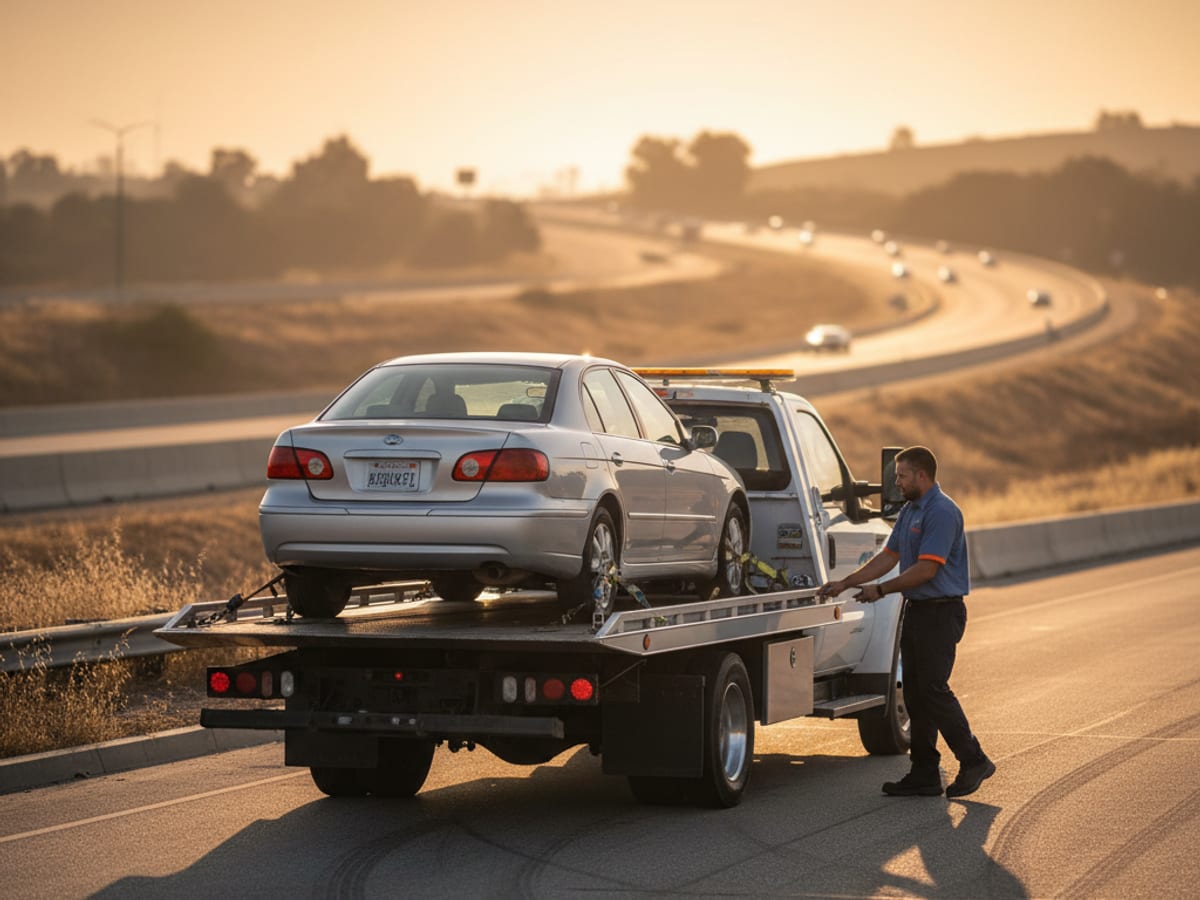
A short local tow can be close to a flat job. A long one is different, because the operator is committing the truck and driver to a round trip, often on I-90, I-93, or I-95, and paying for fuel both ways. That is why long tows are quoted as a base hookup plus a rate for each loaded mile.
So a tow from Boston to the North Shore is a smaller number than Boston to western Massachusetts, and the gap is mostly mileage. Ask the operator to break the quote into the hookup and the per-mile rate, so you can see how the total was built.
What drives the total up
Distance is the biggest factor, but not the only one. A heavier vehicle, an SUV or a truck, costs more to move than a compact. A car that will not roll and needs a flatbed and a winch is more than one that loads easily. Difficult access at either end, like a tight garage or a highway shoulder, adds time.
Tolls and the return trip are baked into a long quote as well. None of this is hidden when you ask for the breakdown, which is the whole point of getting the quote before you commit.
The cap on non-consensual long tows
If the tow is not one you requested, a police-ordered or private-property tow, the DPU rates in 220 CMR 272 apply. The base tow up to five miles is capped at $132, and every mile over five is capped at $4.40. That per-mile cap is the ceiling for that kind of tow, regardless of how far the car is moved.
Those caps do not apply to a tow you arrange yourself. A consensual long-distance tow is a quoted commercial job, so the protection there is a clear, itemized quote up front rather than a statutory rate.
Cheaper ways to move a car a long way
A tow is not always the right tool for a long move. If the car runs and is safe, driving it or hiring a driver can beat a per-mile tow. If you are relocating and the car does not need to arrive with you, an auto-transport carrier that hauls several cars at once is often cheaper per mile than a dedicated tow truck, though it is slower to schedule.
A tow makes sense when the car cannot be driven, when you need it moved now, or when driving it risks more damage. For a disabled car far from home, get a tow quote and compare it against a transport quote before deciding.
Frequently asked questions
How is a long-distance tow priced from Boston? Usually a base hookup fee plus a per-mile rate for the loaded miles. The operator quotes the full total before dispatch.
Is there a legal cap on the per-mile rate? Only for non-consensual tows. Under 220 CMR 272, mileage over five miles is capped at $4.40. A tow you request yourself is a quoted commercial job with no statutory cap.
Is a tow the cheapest way to move a car across the state? Not always. If the car runs, driving it or using an auto-transport carrier can cost less per mile. A tow is best when the car cannot be driven or must move now.
What makes a long tow cost more? Distance, vehicle weight, whether a flatbed and winch are needed, access at both ends, tolls, and the truck’s return trip.
When to call us
Call when a disabled car needs to be moved a long way and you want a quoted job from a local operator. Quick Tow Boston connects drivers with independent operators across Greater Boston, with the price quoted before dispatch. Calls are recorded after a notice. Reach the dispatch line at (857) 858-5057, or read about long-distance towing.