Roadside assistance in Boston comes two ways: a membership you pay for yearly, or pay-per-use help you call only when you need it. Roadside usually covers jump starts, lockouts, flat-tire changes, fuel delivery, and a tow to a shop. If you rarely break down, pay-per-use with the price quoted before dispatch can beat an annual fee. If you drive an older car often, a membership may earn its keep.
What roadside assistance covers
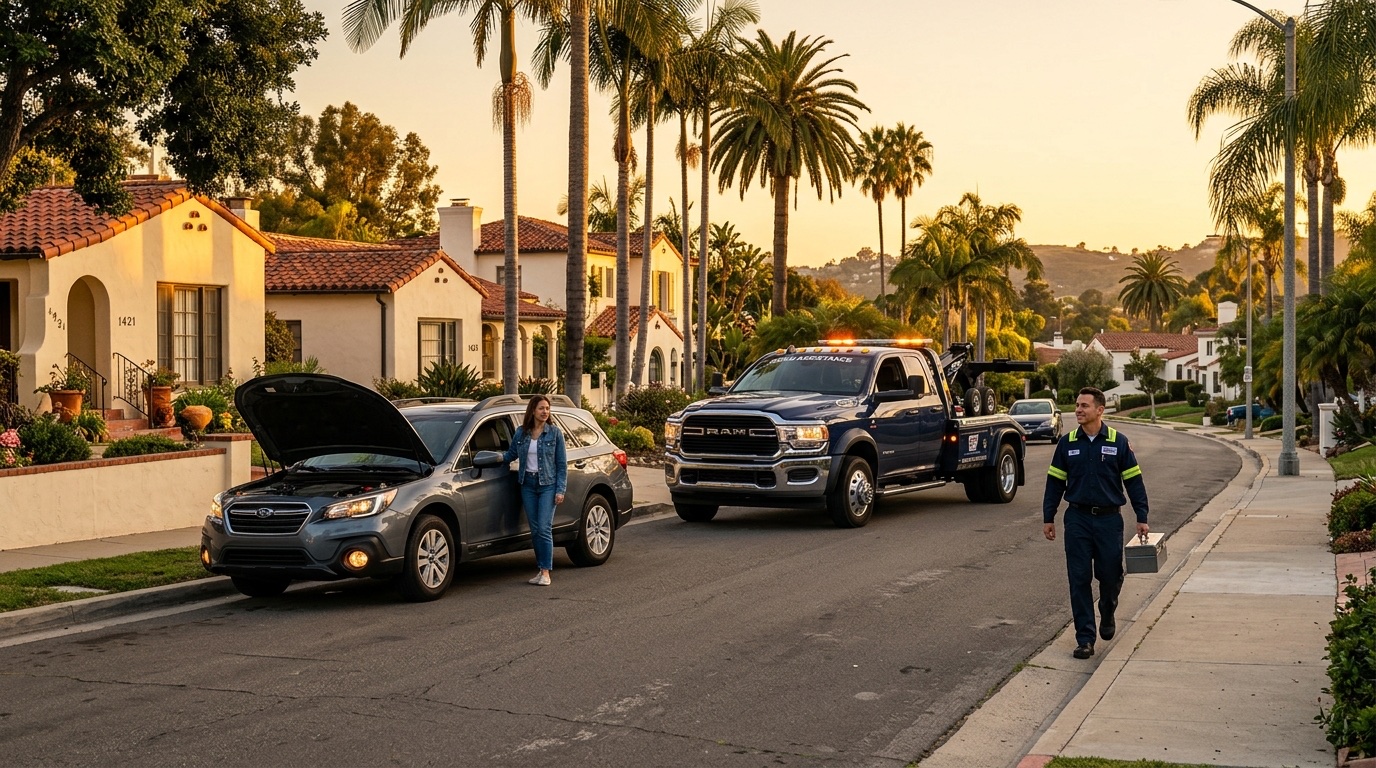
Most roadside help handles the same core problems: a dead battery jump, a lockout, changing or inflating a flat tire, delivering fuel when you run dry, and towing a car that cannot be driven to a nearby shop. It is meant for the roadside emergency, not for repairs.
Knowing that list helps you ask for the right thing. A jump does not fix an alternator, and a tire change does not fix a shredded tire, so the roadside step often gets you to the shop that does the real repair.
Membership versus pay-per-use
A membership is a bet. You pay a yearly fee, and it pays off if you use it enough. It can bundle a set number of tows and service calls, which is reassuring for a long commute or an unreliable car.
Pay-per-use is the opposite. You pay nothing until something happens, then a local operator quotes the job before dispatch and you pay for that one service. There is no annual cost sitting idle. For a driver who goes years between problems, that can be the cheaper path overall, because a membership you never use is money spent on nothing.
When each makes sense
Lean toward a membership if you drive a lot, keep an older car, or take long trips where a single tow could be expensive. The predictable cost and bundled tows can be worth it.
Lean toward pay-per-use if you drive a newer, reliable car, stay mostly around Greater Boston, or already have roadside coverage you forgot about. Many car insurance policies, new-car warranties, and even some credit cards include roadside benefits, so check what you already have before paying for another plan.
Getting help on Boston’s roads
Where you break down shapes the response. On the Mass Pike, I-93, and inside the Ted Williams, Sumner, and Callahan tunnels, the State Police manage incidents, so if you are stuck in a live lane or a tunnel, call 911 first and arrange help once you are safe. On surface roads and city streets, you have more room to pull over and call for service directly.
Either way, give your exact location, the nearest exit and direction on a highway or a cross street in the city, and describe the problem. A pay-per-use operator quotes the job before coming, so you know the cost up front.
Frequently asked questions
Do I need AAA for roadside help in Boston? No. You can call for pay-per-use roadside help with the price quoted before dispatch, and pay only for the service you use.
What does roadside assistance usually cover? Jump starts, lockouts, flat-tire changes, fuel delivery, and a tow to a nearby shop. It handles the roadside emergency, not the repair.
Is pay-per-use cheaper than a membership? It can be if you rarely break down, since a membership you do not use is money spent on nothing. Frequent drivers and older cars may do better with a membership.
Might I already have roadside coverage? Often yes. Check your car insurance, a new-car warranty, and your credit cards before buying a separate plan, because roadside benefits are commonly bundled.
When to call us
Call when you need a tow or roadside help and want a local operator matched to you. Quick Tow Boston connects drivers with independent operators across Greater Boston, with the price quoted before dispatch. Calls are recorded after a notice. Reach the dispatch line at (857) 858-5057, or read about roadside assistance.