Cambridge runs its own impound, not the City of Boston lot at 200 Frontage Road. The plate lookup is at cambridgema.gov, and Cambridge police are at 125 Sixth Street. Resident permits expire on January 31 each year, and Memorial Drive has the famous low bridges where a too-tall truck gets Storrowed every year. Quick Tow Boston explains how parking and towing work in Cambridge.
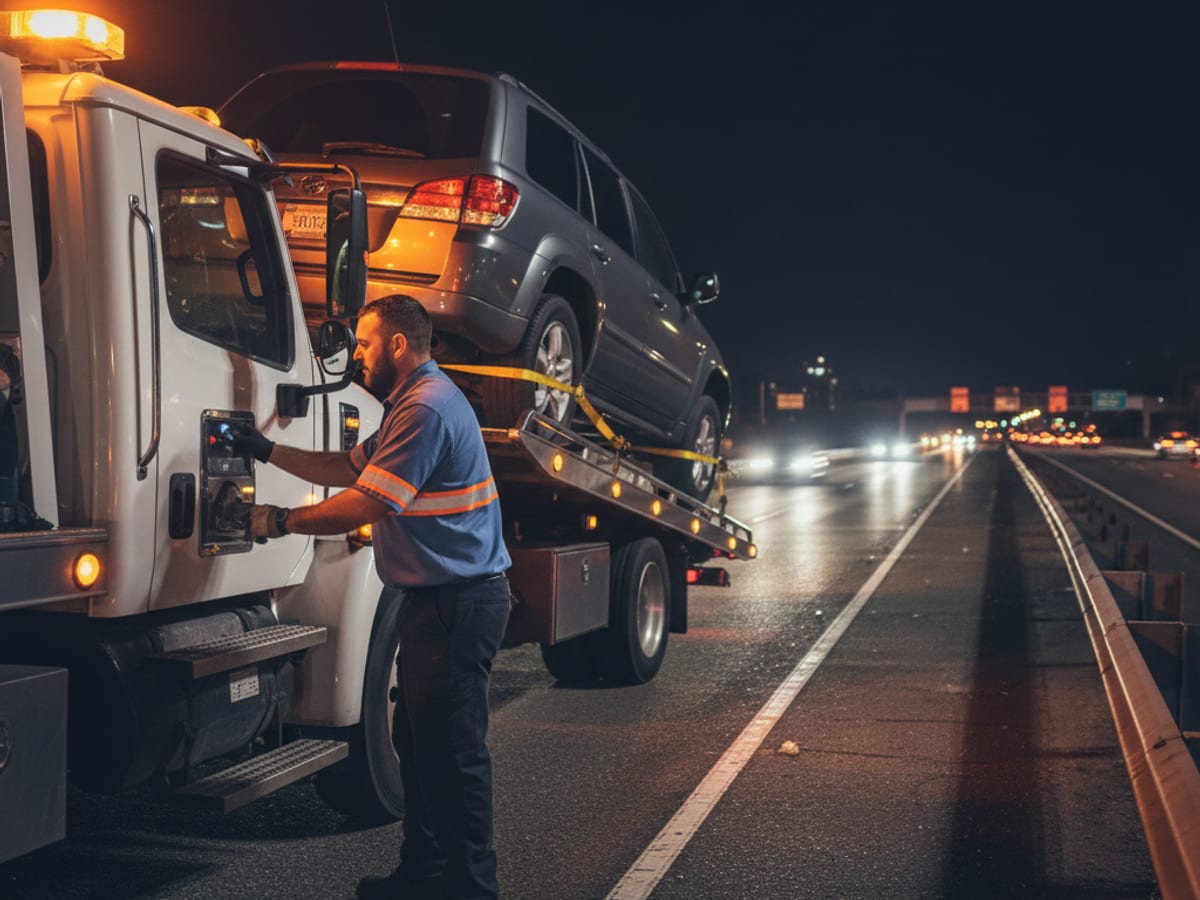
How Cambridge tows work
A car towed in Cambridge goes to the city’s contracted tow company’s lot, not to the Boston lot. The release process is Cambridge’s, and the fees follow the state DPU maximums under 220 CMR 272.00, not Boston’s published rates.
The plate lookup at cambridgema.gov confirms whether a specific car has been towed. The driver enters at least three characters of the plate, and the lookup covers recent tows.
The contracted tow company’s release process is at the lot. The driver needs a valid driver’s license, the license plate number, proof of registration, and proof of insurance. The lot takes the DPU-maximum fees, and a bill that adds a gate fee or an after-hours fee is overcharging.
Resident permits and the January 31 expiry
Cambridge resident parking permits expire on January 31 each year. A driver who parks in a permit zone without a current permit is at risk of being ticketed and towed, even if the car has been parked there for years.
The renewal opens in January, and a driver who waits until February 1 may find the car ticketed or towed. The right move is to renew in the first week of January, or to renew online as soon as the renewal window opens.
Cambridge’s permit zones are neighborhood-specific, and a permit for one neighborhood does not cover another. A driver who moves from one part of Cambridge to another has to update the permit, not just the address.
Memorial Drive and the low bridges
Memorial Drive runs along the north bank of the Charles River through Cambridge, and a stretch of it has low bridges with around 9 feet of clearance. The bridges are the same Storrowing trap that catches trucks on Storrow Drive in Boston, and a rental truck or a moving truck that forgets the height clips the bridge.
A Storrowing incident shuts Memorial Drive lanes for hours. The State Police arrive, the truck has to be recovered, and the cargo has to be salvaged. The cost is on the truck renter, and the rental contract usually excludes bridge strikes.
A driver renting a moving truck for a Cambridge move should know the truck’s height before driving. The clearance number is on the truck’s paperwork and on a sticker on the dashboard.
The Alewife bottleneck
The Alewife and Fresh Pond corner is one of the most congested stretches of road in Massachusetts. I-93, Route 2, and the Alewife Brook Parkway all converge near the Alewife T station, and rush hour on any of them can spill back into Cambridge.
Breakdown and crash recovery at Alewife is a daily occurrence, and the operator needs to know the local roads to reach the scene quickly. A driver who breaks down at Alewife should pull to the right shoulder if possible, set the hazards, and call for help.
The universities and the move-in surge
Harvard and MIT drive the calendar in Cambridge. Move-in week fills the streets with rental trucks and double-parked cars, and a moving truck without a permit risks a ticket or a tow.
The city publishes the move-in rules in advance, and a mover who knows the rules avoids the ticket. The same rules apply as in Boston: get the city permit, know the truck height, block the curb legally, time the move, and have a backup plan.
How parking enforcement works in Cambridge
Cambridge’s parking enforcement runs across the neighborhoods and the commercial districts. The most common tickets are resident-permit violations, meter violations, street-cleaning violations, and snow-emergency violations during declared emergencies.
A car that accumulates five or more unpaid tickets in Cambridge can be booted or towed, similar to Boston’s boot list. The driver has to pay the tickets and any fees to get the car back.
What Quick Tow Boston does in Cambridge
Quick Tow Boston connects drivers with independent local operators who handle Cambridge tows, breakdowns, and recoveries. The operator quotes the price before the truck rolls, and the dispatch runs at any hour.
For a car towed by Cambridge, the right call is the Cambridge police at 125 Sixth Street and the contracted tow company’s lot. The lookup at cambridgema.gov confirms the tow.
For a car that needs a tow or a roadside service in Cambridge, the operator quotes the price and dispatches. The job is a regular tow, and the operator’s quote covers the mileage and the work.
Frequently asked questions
Where does a Cambridge-towed car go? Cambridge runs its own impound through a contracted company. Confirm the lot location with Cambridge police at 125 Sixth Street, and check the plate at cambridgema.gov.
When do Cambridge resident permits expire? January 31. Renew in early January to avoid a ticket or a tow.
What are the Memorial Drive low bridges? Memorial Drive has bridges with about 9 feet of clearance. A rental truck taller than that will hit the bridge, the same way trucks hit Storrow Drive in Boston.
Does Quick Tow Boston handle Cambridge impound disputes? No. We connect drivers with independent local operators for new tows. For a Cambridge impound dispute, contact Cambridge police and the Massachusetts Attorney General’s office.
When to call us
Call when a vehicle is disabled in Cambridge and needs a local operator sent, not when a car is already in the Cambridge impound. Quick Tow Boston connects drivers with independent local operators across Greater Boston, and the operator quotes the price before anyone is dispatched. Calls are recorded after a notice. Reach the dispatch line at (857) 858-5057.