To junk a car in Massachusetts you keep the title and hand it to the buyer or scrapyard, and you return the plates to the RMV to cancel the registration and stop the insurance. A car that is not yours is a different problem: under M.G.L. c. 90 s. 22C, a vehicle apparently abandoned and left over 72 hours on a public way or on property without permission can be removed. Sort out which situation you are in first.
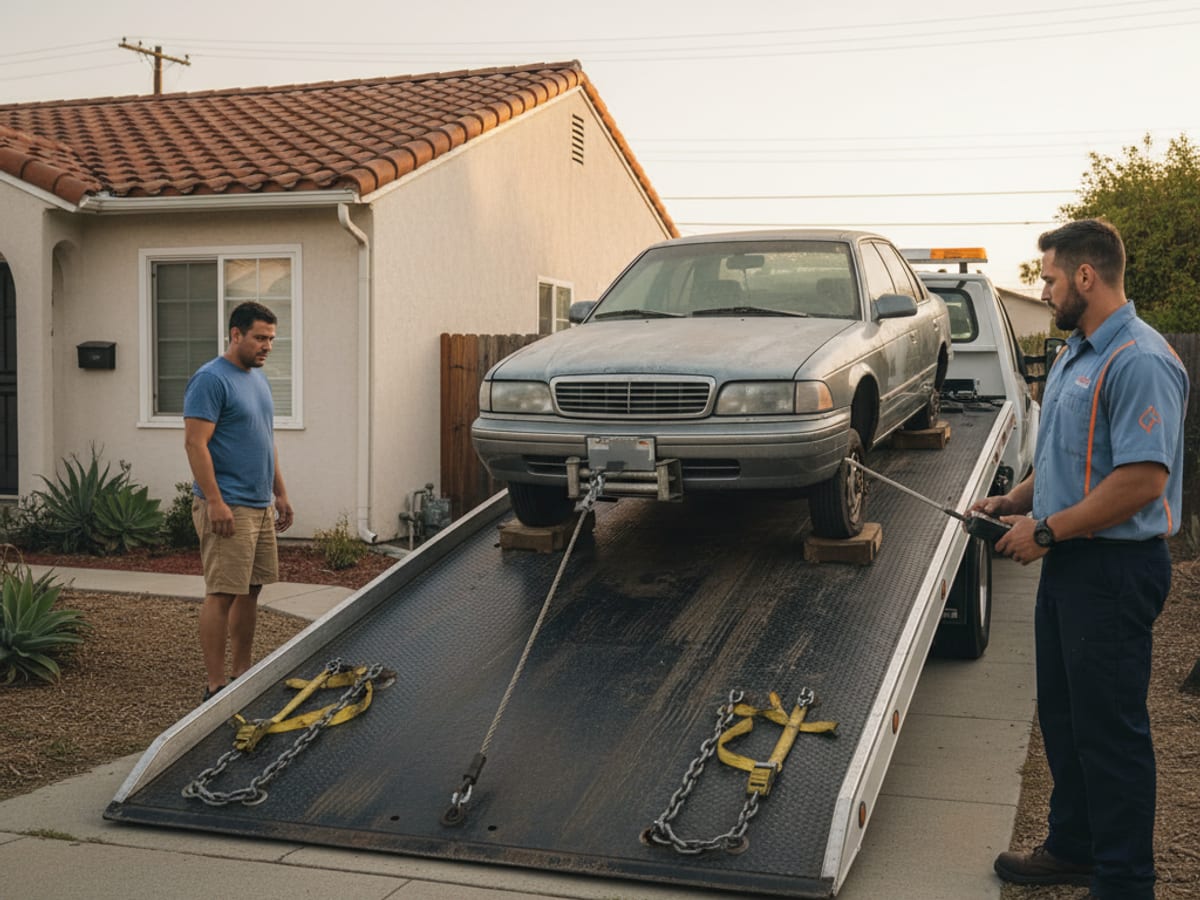
Junking your own car: the paperwork
The title is the key document. When you sell a dead car to a scrapyard or a junk buyer, you sign the title over to them. If you cannot find it, contact the RMV about a duplicate title before you complete the sale, because a buyer needs proof you own what you are scrapping.
Once the car is gone, return the plates to the RMV. That cancels the registration, and canceling the registration is what lets you cancel or adjust the insurance. Skipping this step is a common mistake, because you can end up paying to insure and register a car that no longer exists. Keep a copy of the signed title and a receipt from the buyer.
The 72-hour abandoned rule
If the problem is a derelict car that is not yours, Massachusetts law defines when it becomes removable. Under M.G.L. c. 90 s. 22C, a vehicle is treated as abandoned if it appears abandoned and has stood more than 72 hours on a public way, or on property without the owner’s permission. At that point it may be removed.
On a public street, that removal runs through the local authorities, so you report the car rather than move it yourself. On your own private property, the private-property towing rules of M.G.L. c. 266 s. 120D apply, which means posted signs and written notice to the police before a tow. Either way, 72 hours is the threshold the statute sets.
Reporting an abandoned car in Boston
For a derelict or abandoned car on a Boston street, contact the city through 311 and give the exact location, a description, and the plate if it has one. The city handles removal of abandoned vehicles from public ways.
If the car has been dumped on your own lot, you are in private-property territory, so follow c. 266 s. 120D: the signage and the written notice to the police must be in place before a tow, and the tow can only charge the DPU rates. A car stored after an accident falls under M.G.L. c. 255 s. 39A instead, where the owner has 21 days to respond to notice before the storage lien process moves forward.
What a scrap car is worth
The value of a junk car depends on its weight, the scrap metal market, and whether any parts have resale value, so no honest number fits every car. Get more than one quote, confirm whether towing the car away is included in the offer, and make sure the buyer takes the signed title and gives you a receipt. Avoid any buyer who wants the car without the paperwork, because the title transfer is what protects you from later liability.
Frequently asked questions
What paperwork do I need to junk a car in Massachusetts? The signed title, which goes to the buyer or scrapyard, and then the plates returned to the RMV to cancel the registration. Keep a copy of the title and a receipt.
When is a car legally abandoned in Massachusetts? Under M.G.L. c. 90 s. 22C, when it appears abandoned and has stood more than 72 hours on a public way or on property without permission.
How do I report an abandoned car in Boston? Contact the city through 311 with the location, a description, and the plate. The city handles removal from public streets.
Can I tow an abandoned car off my own property? Only under the private-property rules of M.G.L. c. 266 s. 120D, which require posted signs and written notice to the police before the tow.
When to call us
Call when a non-running car needs to be hauled and you want a local operator matched to the job. Quick Tow Boston connects drivers with independent operators across Greater Boston, with the price quoted before dispatch. Calls are recorded after a notice. Reach the dispatch line at (857) 858-5057, or read about junk car removal.