Accident recovery and winch-outs in Greater Boston are not a one-operator job. The scene belongs to the police or MassDOT first, and the tow operator works under their direction. The operator’s job is to clear the wreckage safely and stage the disabled cars for the next step, and that takes a different rig than a sedan tow. Quick Tow Boston connects drivers and dispatchers with independent local operators who do scene recovery, and the operator quotes the job before the truck rolls.
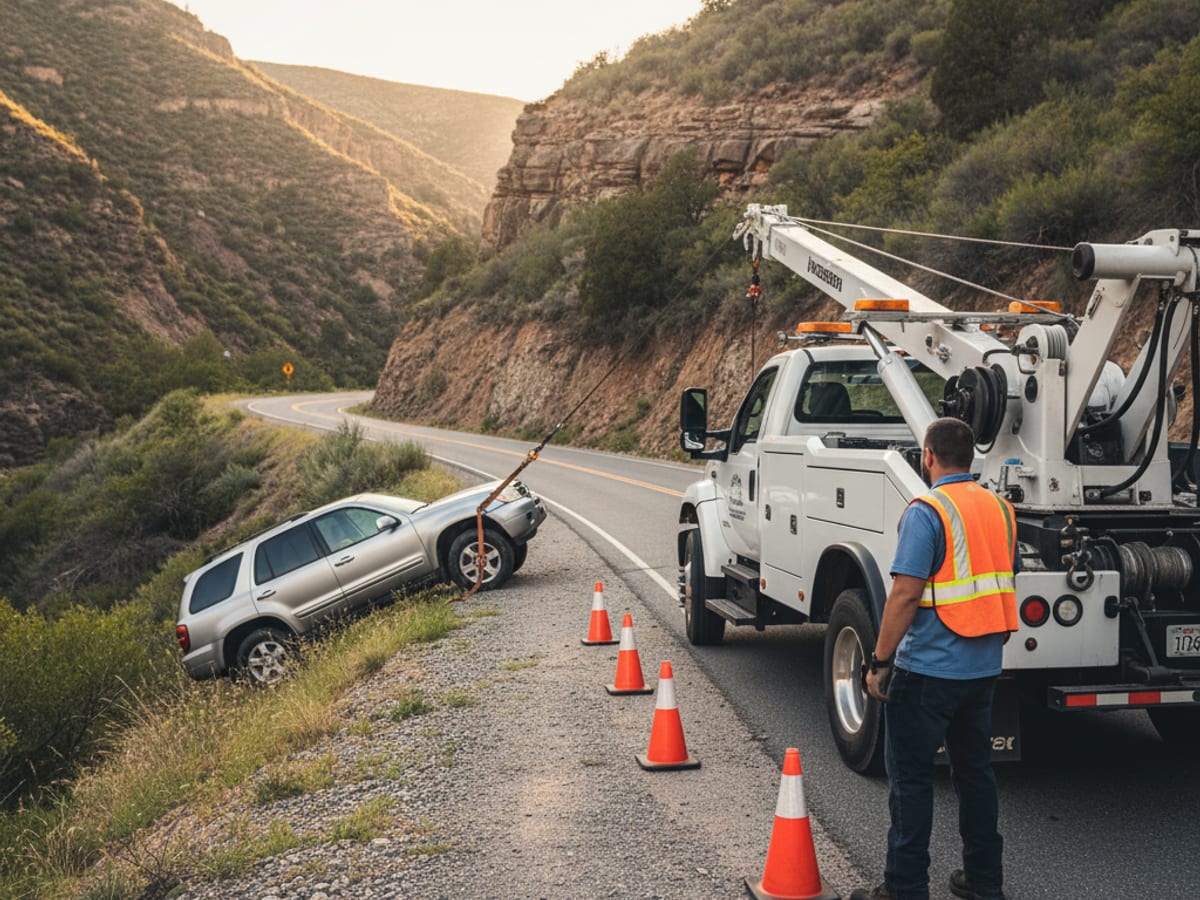
What accident recovery is and what it is not
An accident recovery is the work of clearing a vehicle that cannot be driven away from a scene. It covers:
- A car that has gone off the road into a ditch or a median
- A roll-over that has the car on its side or its roof
- A multi-vehicle crash on an expressway that has to be cleared lane by lane
- A car that has gone into water and needs to be winched out
- A car stuck in snow, mud, or sand that needs to be pulled back onto a road
- A car that has crashed into a fixed object and cannot be driven
The first thing to know is that an accident scene is a police job first and a tow job second. The State Police or the local police set the timing, decide when the operator can begin, and direct traffic around the scene. MassDOT controls the state highway system, and the MassDOT Highway Assistance Patrol patrols the I-93, I-90, I-95, and Route 128 corridors during weekday rush hours to clear minor incidents.
The operator’s job under that direction is to clear the wreckage safely, stage the car for the next step, and not make the scene worse. A recovery that has to lift a car off a barrier or off a slope takes a heavy-duty wrecker with a boom and an underlift that reaches the right point.
What winch-outs are
A winch-out is a narrower kind of recovery. The car is upright and not damaged, but it is stuck. It might be in a snow-filled ditch off the Mass Pike, in a soft event-lot ground, in coastal sand on a Revere Beach ramp, or in mud after a rain. The operator pulls the car back onto solid ground with a winch cable or a tow strap, without lifting it.
A good winch-out operator carries:
- A winch cable rated for the vehicle class
- Tow straps rated for the work
- A tree-saver strap for soft anchor points
- A shovel and traction boards for soft ground
- A come-along for tight spaces where the truck cannot get close
The wrong approach to a winch-out, like pulling a stuck car from the wrong angle with the wrong strap, can make the situation worse. A good operator reads the scene first and plans the pull.
Where recovery and winch-outs happen in Greater Boston
Three corridors carry most of the recovery work.
The O’Neill Tunnel and I-93. The I-93 tunnel under downtown has no real shoulder, and a crash inside the tunnel is a lane-closure job the operator clears under State Police direction.
The Mass Pike and the Ted Williams Tunnel. I-90 through downtown and out to Allston carries heavy commuter traffic and steady crash volume. The Ted Williams Tunnel is a special case because a stall or a crash inside the tube is a vent-and-clear job.
Route 128 and I-95. The 128 corridor is one of the busiest highways in the metro, and rush-hour crashes on 128 are a daily occurrence.
Outside the highways, recovery work includes:
- Cars off the road in the Blue Hills Reservation
- Cars stuck in coastal sand on the South Shore
- Cars in ditches along Route 2 and Route 1
- Cars in median snowbanks during nor’easters
- Cars in soft event-lot ground at Gillette, Fenway, and TD Garden
What an operator needs to know to quote the job
To get a real number before dispatch, give the operator:
- The vehicle type, year, and approximate weight
- What happened: a crash, a slide-off, a roll-over, a stuck-in-mud, a stuck-in-sand, or a stuck-in-snow
- Whether the car is upright, on its side, or on its roof
- Whether anyone is hurt, and whether the police or EMS have arrived
- The pickup spot and where the car needs to go
- Any scene hazards: fuel, fluid, traffic, weather
A roll-over on I-93 is not the same job as a stuck-in-snow at a Revere Beach ramp. The operator’s quote should reflect that.
What Quick Tow Boston does and does not do
Quick Tow Boston does not own trucks or run a fleet. We connect drivers and dispatchers with independent local operators who do scene recovery and winch-outs, and the operator quotes the price before anyone is dispatched. There is no flat rate and no brand price. The Massachusetts DPU maximums under 220 CMR 272.00 cap non-consensual tows at $132 for the first five miles and $4.40 a mile after, with storage at $35 per 24 hours at a fenced-lit lot. A consensual recovery or winch-out you arrange yourself is priced by the operator and not capped.
How to keep the bill down
Move the car off the travel lane if it is safe and the police have not yet arrived. A car in a live lane is a setup-and-clear job the operator has to do under police direction, and that adds time and equipment.
Have the registration and insurance in the car. A car that has to be held at a yard for paperwork reasons is a storage clock running.
If the car is stuck in snow or sand, do not keep spinning the wheels. That digs the car in deeper and makes the winch-out harder.
Frequently asked questions
Does Quick Tow Boston run its own recovery trucks? No. We connect drivers and dispatchers with independent local operators who do scene recovery, and the operator quotes the price before dispatch.
Is there a state cap on an accident recovery tow? The state DPU maximums under 220 CMR 272.00 cap non-consensual tows at $132 for the first five miles and $4.40 a mile after. A consensual recovery you arrange yourself is priced by the operator and not capped.
Who sets the timing at an accident scene? The State Police or the local police set the timing. MassDOT directs the operator on state highways. The operator works under their direction.
What is a winch-out? A winch-out is a recovery where the car is stuck but not damaged, like in a ditch, in snow, or in soft sand. The operator pulls the car back onto solid ground with a winch cable or a tow strap, without lifting it.
When to call us
Call when a vehicle is disabled and needs a real recovery operator, not a sedan tow and a guess. Quick Tow Boston connects drivers and dispatchers with independent local operators across Greater Boston, and the operator quotes the price before anyone is dispatched. Calls are recorded after a notice. Reach the dispatch line at (857) 858-5057.