A flat tire in Greater Boston is one of two things: a roadside change when the spare works, and a tow when it does not. The operator’s job is to figure out which one it is, and that takes a quick read of the situation. Quick Tow Boston connects drivers with independent local operators who run flat-tire service, and the operator quotes the job before the truck rolls.
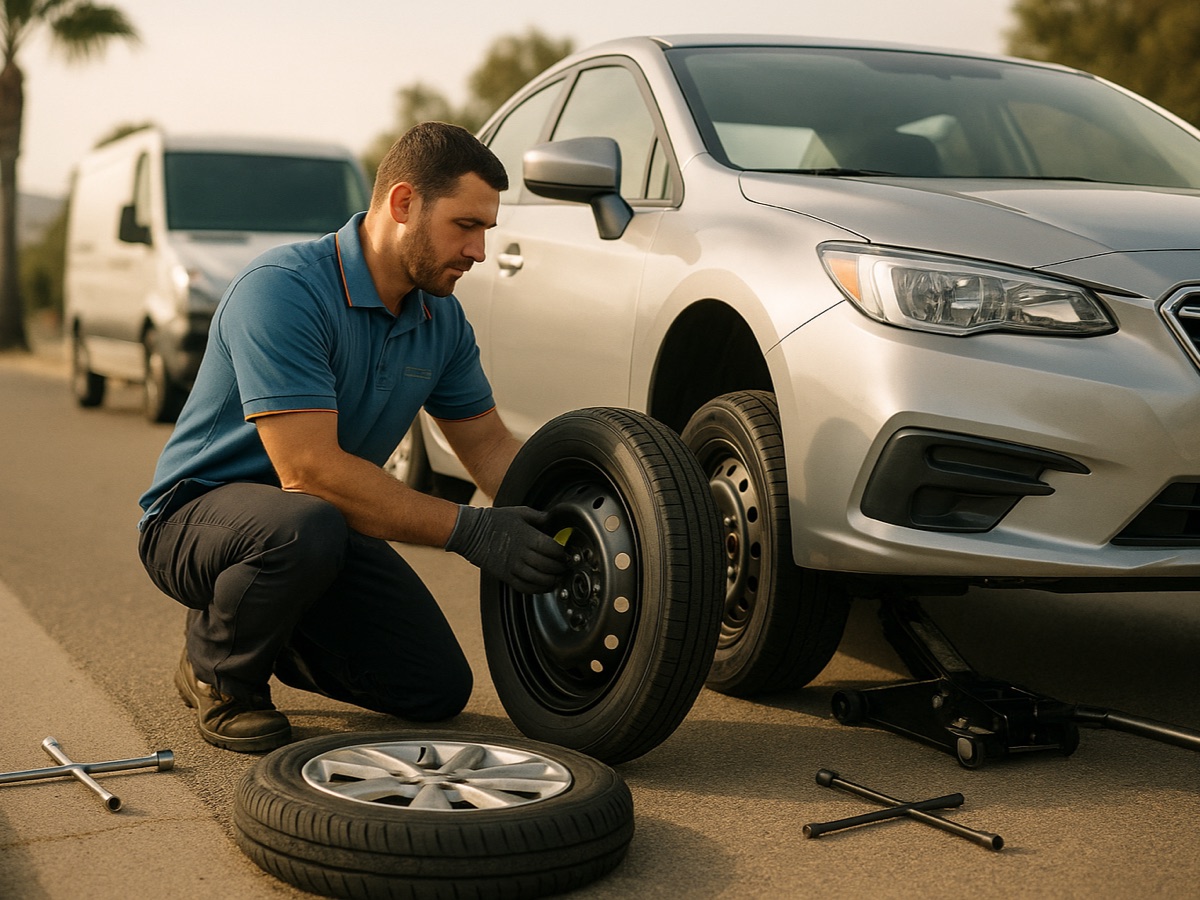
When a flat is a roadside change
A flat tire is a roadside change when the driver has a spare, the spare is inflated, and the tools to do the swap are in the car. The operator pulls up, sets the hazards, loosens the lug nuts with a breaker bar, lifts the car with the factory jack, and swaps the tire. The whole job takes 20 to 30 minutes if the wheel is not stuck and the operator has the right socket.
A roadside change is the right call when:
- The driver has a full-size spare or a donut spare, and the spare is inflated
- The flat is in the sidewall or the tread and the tire cannot be plugged safely
- The driver does not have a jack, a lug wrench, or the physical ability to do the swap
- The car is in a safe spot for the operator to work
A plug-and-patch repair is not a roadside service. Plug-and-patch is a shop job, because the tire has to come off the wheel and be repaired from the inside. The right move on the road is to swap to the spare and drive to a tire shop.
When a flat becomes a tow
A flat becomes a tow when:
- There is no spare, or the spare is missing
- The spare is flat, damaged, or wrong-sized for the car
- The flat is on a run-flat tire that has lost air and cannot be driven on
- The wheel is damaged and the lug nuts will not loosen
- The car is on a highway shoulder in a position that is unsafe for a roadside change
- The car is in a parking garage on a level that is unsafe for a roadside change
A run-flat tire is its own problem. Run-flats are designed to drive a short distance on zero pressure, and the operator can usually swap to a spare if the car has one. If the car has no spare, the run-flat has to be replaced at a shop, and the operator tows the car to the shop of the driver’s choice.
Where flat-tire calls happen in Greater Boston
Three situations generate steady flat-tire work in this metro.
Highway shoulders. Nails, screws, and potholes take their toll on the Mass Pike, I-93, and Route 128. A shoulder stop on I-93 is a setup-and-change job the operator does under the lights.
Construction zones. The Seaport and the Inner Belt are full of active construction, and construction debris is a steady source of flats.
Parking garages. The downtown garages see curbs and tight turns that scrape rims and flats sidewalls. A garage spot on the third level with a sidewall flat is usually a tow, not a roadside change.
Move-in day and special events. The September 1 lease turnover and big event nights at Fenway and TD Garden generate flat-tire calls alongside the tow and lockout work.
What an operator needs to know to quote the job
To get a real number before dispatch, give the operator:
- The make, model, and year
- Whether the car has a spare, and whether the spare is inflated
- Where the car is, and the floor or level if it is in a garage
- Whether the flat is in the tread or in the sidewall
- Whether the wheel is damaged
- Any access restrictions: gate codes, garage clearance, security requirements
A shoulder stop on I-93 is a different job from a third-level garage flat with no spare. The operator’s quote should reflect that.
What Quick Tow Boston does and does not do
Quick Tow Boston does not own trucks or run a fleet. We connect drivers with independent local operators who run flat-tire service, and the operator quotes the price before anyone is dispatched. There is no flat rate and no brand price. The Massachusetts DPU maximums under 220 CMR 272.00 cap non-consensual tows, but a consensual flat-tire change or a consensual tow are priced by the operator and not capped.
How to keep the bill down
Check the spare before the operator arrives. A flat spare is a tow instead of a change, and the operator charges for the difference.
Move the car to a safe spot if you can. A car on the shoulder of a live highway is a setup job that adds time.
If you have a tire plug kit and the flat is in the tread, plug it yourself and drive to a shop for a permanent repair. A plug in the tread is a legitimate temporary fix.
Frequently asked questions
Does Quick Tow Boston run its own flat-tire trucks? No. We connect drivers with independent local operators who run flat-tire service, and the operator quotes the price before dispatch.
Can the operator plug a flat tire on the side of the road? No. Plug-and-patch is a shop job because the tire has to come off the wheel. The right move on the road is to swap to the spare and drive to a tire shop.
What if I have a run-flat tire with no spare? A run-flat with no spare is a tow to a tire shop. Run-flats are designed to drive a short distance on zero pressure, but a sidewall failure or a long-distance drive to a shop is a tow.
Is there a state cap on a flat-tire tow? The state DPU maximums under 220 CMR 272.00 cap non-consensual tows at $132 for the first five miles and $4.40 a mile after. A consensual flat-tire change or tow you arrange yourself is priced by the operator and not capped.
When to call us
Call when the car has a flat and the spare is missing, flat, or unusable, or when the car is in a position that is unsafe for a roadside change. Quick Tow Boston connects drivers with independent local operators across Greater Boston, and the operator quotes the price before anyone is dispatched. Calls are recorded after a notice. Reach the dispatch line at (857) 858-5057.