Running out of gas in Greater Boston is a small call when help arrives, but it is not always a quick one. A shoulder stop on I-93 needs a setup with the lights on and the cab facing the road. A garage stop on the third level of a downtown structure needs a truck that can fit the ramps. Quick Tow Boston connects drivers with independent local operators who run fuel delivery, and the operator quotes the job before the truck rolls.
What fuel delivery is
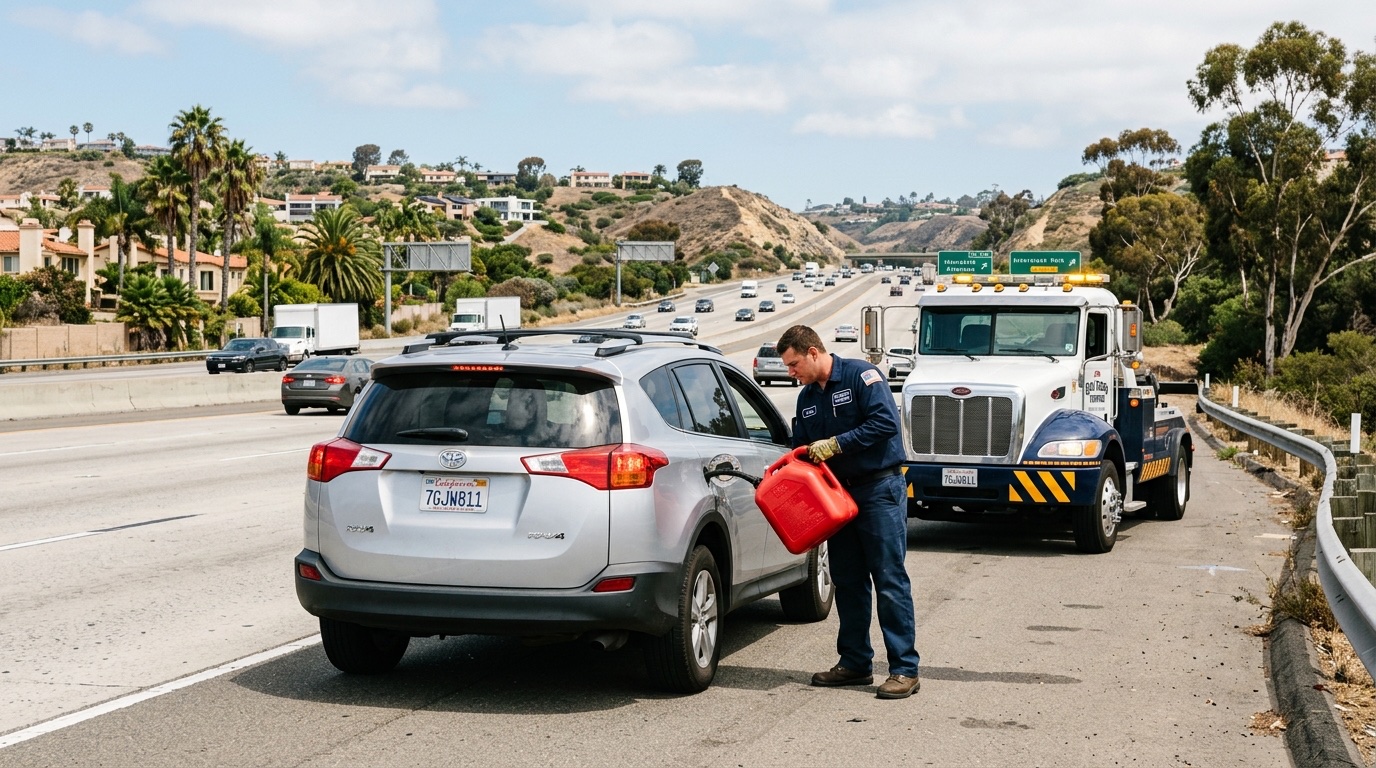
A fuel delivery is a small tank of gasoline or diesel brought to the disabled vehicle. The operator carries a few gallons in an approved container, fills the tank enough to get the car to a gas station, and the driver drives off. The full fill-up happens at the pump.
Fuel delivery is not a refueling service. A few gallons gets the car to the nearest gas station, and that is what the operator quotes.
Why the right fuel matters
A modern car that takes the wrong fuel is a four-figure repair. Diesel in a gasoline engine destroys the fuel injectors, and gasoline in a diesel engine damages the fuel system. The operator asks for the fuel type before dispatch, and the driver should know whether the car is regular unleaded, premium, or diesel. Most cars take 87 octane regular, but some require 91 or 93.
If the driver pumped the wrong fuel into the car, that is a different job. The car should not be started, because running the wrong fuel circulates it through the engine. The right move is to call for a tow to a shop, not a fuel delivery.
Where fuel delivery calls happen in Greater Boston
Three situations generate steady fuel-delivery work in this metro.
Highway shoulders. The Mass Pike, I-93, and Route 128 see commuter traffic that drains a tank from full to empty on a long drive. A driver who misses the last exit and runs the tank dry on the shoulder is a fuel-delivery call.
Parking garages. The downtown garages, especially the ones under office buildings and hospitals, generate fuel-delivery calls when a driver forgets to refill over a long meeting or a long shift. The third-level or fourth-level spot in a tight garage is a special problem because the delivery truck has to fit the ramps.
Office parks along Route 128. The 128 tech corridor pulls commuter traffic into office parks with large surface lots. A driver who parks on Friday and returns on Monday to an empty tank is a Monday-morning call.
Move-in day and special events. The September 1 lease turnover and the big event nights at Fenway and TD Garden generate fuel-delivery calls alongside the tow and lockout work.
What an operator needs to know to quote the job
To get a real number before dispatch, give the operator:
- The fuel type: regular unleaded, premium, or diesel
- Where the car is, and the floor or level if it is in a garage
- Whether the car is in a safe spot for a delivery truck to reach
- Whether the gas cap is accessible
- Any access restrictions: gate codes, garage clearance, security requirements
A fuel delivery to a third-level garage spot is a different job from a fuel delivery to a shoulder on I-93. The operator’s quote should reflect that.
What Quick Tow Boston does and does not do
Quick Tow Boston does not own trucks or run a fleet. We connect drivers with independent local operators who run fuel delivery, and the operator quotes the price before anyone is dispatched. There is no flat rate and no brand price. The Massachusetts DPU maximums under 220 CMR 272.00 cap non-consensual tows, but a consensual fuel delivery is priced by the operator and not capped.
How to keep the bill down
Move the car to a safe spot if you can. A car on the shoulder of a highway with live traffic is a setup-and-deliver job the operator has to do under the lights, and that adds time.
Know your fuel type before the operator arrives. A wrong-fuel call is a different job and a different bill.
If you are in a garage, get to a spot the delivery truck can reach. A truck cannot climb three levels of a 6-foot-6 clearance structure.
Frequently asked questions
Does Quick Tow Boston run its own fuel delivery trucks? No. We connect drivers with independent local operators who run fuel delivery, and the operator quotes the price before dispatch.
How many gallons do they bring? A few gallons, enough to get the car to the nearest gas station. The full fill-up happens at the pump.
What if I put the wrong fuel in my car? Do not start the car. Call for a tow to a shop, not a fuel delivery. Running the wrong fuel circulates it through the engine.
Is there a state cap on a fuel delivery? The state DPU maximums under 220 CMR 272.00 cap non-consensual tows at $132 for the first five miles and $4.40 a mile after. A consensual fuel delivery is priced by the operator and not capped.
When to call us
Call when the car is out of gas and needs a small tank of fuel brought to it, not when the car is in for service or has run the tank dry at home. Quick Tow Boston connects drivers with independent local operators across Greater Boston, and the operator quotes the price before anyone is dispatched. Calls are recorded after a notice. Reach the dispatch line at (857) 858-5057.