Heavy-duty towing in Greater Boston covers anything past a one-ton pickup: box trucks, delivery vans, buses, dump trucks, and tractor units off the freight corridors. The rig that pulls a Civic off Storrow will not pull a 26-foot box truck out of the O’Neill Tunnel, and the operator who arrives in a car carrier cannot air-brake a Freightliner at a Conley Terminal dock. Quick Tow Boston connects drivers and dispatchers with independent local operators who run the right equipment, and the operator quotes the job before the truck rolls.
What counts as heavy-duty
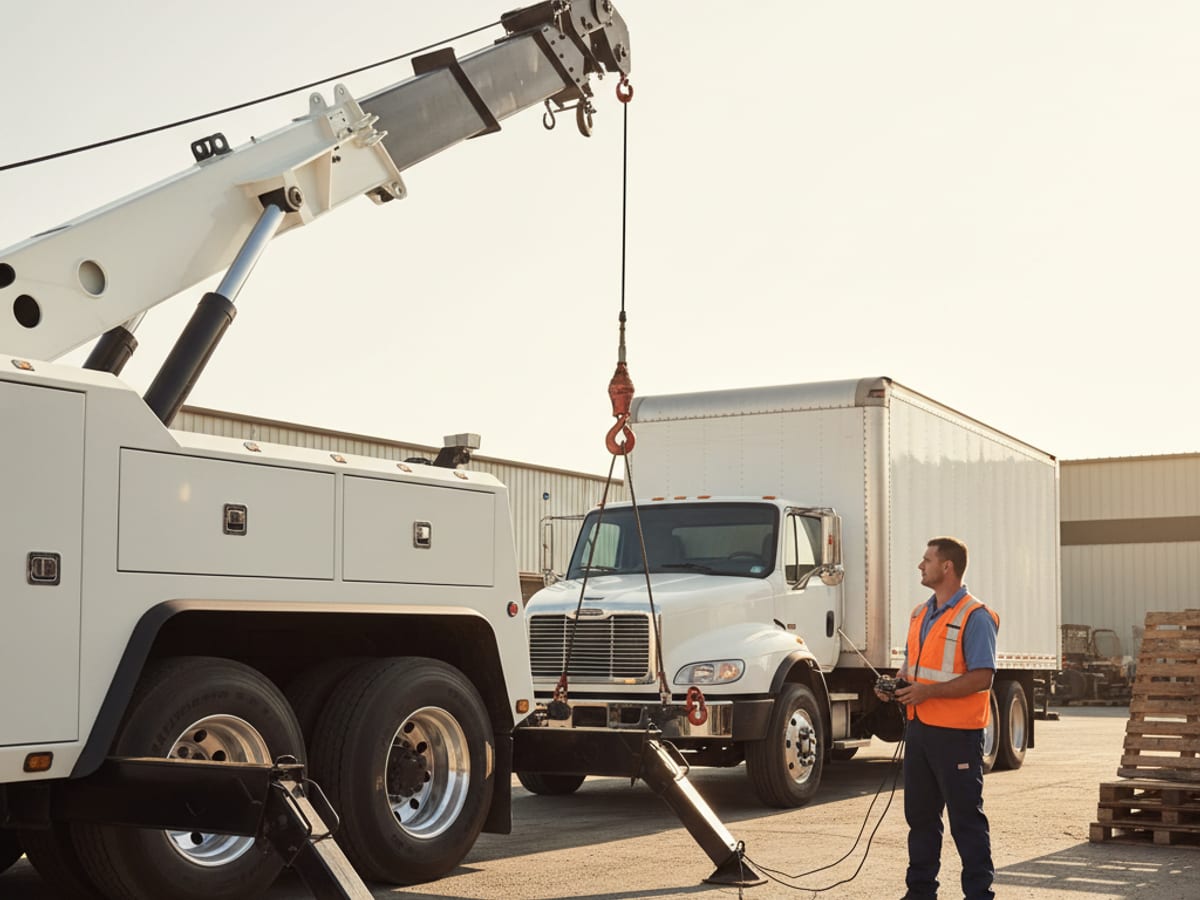
A general rule of thumb in the trade: anything over 10,000 pounds gross vehicle weight, or anything too long or too tall to fit a standard wheel-lift, gets handled as heavy-duty. That includes most box trucks over 16 feet, the F-650 and bigger stake-beds, RVs and motorhomes, school buses, transit buses, garbage trucks, dump trucks, and Class 7 and 8 tractors. The list matters because the equipment is different: a heavy-duty wrecker is built on a tandem-axle chassis with a 35- to 75-ton boom and an underlift that reaches under a truck’s frame rails. A regular wrecker does not have that reach, and forcing it onto a heavy vehicle damages both.
The other thing that separates heavy-duty from light-duty is what comes with the truck. Air brakes need to be checked before any move. Some rigs have to be tied down or have their parking brakes released by hand. A transmission in park on a stuck truck is a special problem. A heavy-duty operator carries the air hoses, brake releases, and rigging straps that go with the job.
Where heavy-duty tows happen in Greater Boston
Three corridors carry most of the heavy-duty work in this metro.
Conley Terminal and the South Boston port. The container terminal off Summer Street generates a steady stream of port trucks, day cabs, and chassis tractors. A breakdown there usually needs a boom truck that can get in and out of a tight yard, plus an operator familiar with terminal gate procedures.
The I-93 and Mass Pike freight lanes. I-93 from the O’Neill Tunnel out through the Inner Belt, and I-90 from the Ted Williams Tunnel west past Allston, run the box trucks and straight trucks that move goods into and out of the metro. A box truck stall in the O’Neill Tunnel is a live-lane problem the way a sedan stall is, only bigger.
Route 128 and I-95. The 128 corridor through Waltham, Lexington, Burlington, and Peabody is full of warehouse and light-industrial traffic, and the breakdowns that come with it. A delivery van on the shoulder of 128 at rush hour is a common call.
Outside those corridors, heavy-duty tows include the occasional bus on the MBTA’s Silver Line detour, the school bus that breaks down on a field trip, and the dump truck that loses a hydraulic line on a residential paving job.
What an operator needs to know to quote the job
Heavy-duty quotes are not one-size-fits-all, because the equipment is different and the rigging is different. To get a real number from the operator before dispatch, give them these details:
- The vehicle type, year, gross vehicle weight, and whether it is a one-ton, medium-duty, or Class 7/8
- What it is carrying, and whether the load is tied down
- Where it broke down and where it needs to go
- Whether the engine will turn over and whether the brakes hold air
- Whether the truck is blocked in by other vehicles or dock equipment
- Whether the truck is on a tilt, jackknifed, or off the roadway
A loaded 53-foot trailer off Route 128 is not the same job as an empty box truck at a Conley gate, and the quote should reflect that.
What Quick Tow Boston does and does not do
Quick Tow Boston does not own trucks or run a fleet. We connect drivers and dispatchers with independent local operators who run the equipment for each job, and the operator quotes the price before anyone is dispatched. For heavy-duty work, that often means a boom truck or a rotater, depending on the load. The operator confirms the rig and the price before rolling.
There is no flat rate and no brand price. The Massachusetts DPU maximums under 220 CMR 272.00 cap non-consensual tows at $132 for the first five miles and $4.40 a mile after, with storage at $35 per 24 hours at a fenced-lit lot, but those figures apply to police-ordered and private-property trespass tows. A consensual heavy-duty tow you arrange yourself is priced by the operator and not capped by the state.
How to keep the bill down
Move the load if you can. A loaded box truck is a different job from the same truck empty, because of the gross weight and the tie-down work. If the cargo can be offloaded or transferred before the tow, the operator’s job gets shorter.
Get the truck off the travel lanes if it is safe. A box truck stalled in a live lane on I-93 needs a police setup and a faster dispatch, and both add to the bill. If the truck can coast to a shoulder, an off-ramp, or a wide spot, the operator can work without shutting the road.
Have the registration and insurance in the cab. A heavy-duty tow that has to leave a truck in a yard for paperwork reasons is a storage clock running, and storage is what grows the bill.
Frequently asked questions
Does Quick Tow Boston run its own heavy-duty trucks? No. We connect drivers with independent local operators who run the equipment for each job, and the operator quotes the price before dispatch.
Is there a state cap on a heavy-duty tow? The state DPU maximums under 220 CMR 272.00 cap non-consensual tows at $132 for the first five miles and $4.40 a mile after. A consensual heavy-duty tow you arrange yourself is priced by the operator and not capped.
Can any wrecker pull a box truck? No. A heavy-duty wrecker is built on a tandem-axle chassis with a 35- to 75-ton boom and an underlift that reaches under a truck’s frame rails. A light-duty wrecker does not have the reach.
How fast can a heavy-duty operator reach a Conley Terminal break-down? Port-yard dispatch is its own procedure and depends on terminal gate access. Call the line and give the operator the gate and dock number so they can quote and arrange access.
When to call us
Call when a heavy vehicle is disabled and needs a real rig and a real operator, not a car carrier and a guess. Quick Tow Boston connects drivers and dispatchers with independent local operators across Greater Boston, and the operator quotes the price before anyone is dispatched. Calls are recorded after a notice. Reach the dispatch line at (857) 858-5057.