Motorcycle towing in Greater Boston is its own job, not a smaller sedan tow. A motorcycle is short, top-heavy, and easy to damage in a tie-down, and the rig that pulls a Civic off Storrow Drive will either refuse the bike or strap it wrong. Quick Tow Boston connects riders with independent local operators who run the right equipment, and the operator quotes the job before the truck rolls.
Why a motorcycle needs its own rig
A standard wheel-lift is built to grab a car’s tires from underneath. It does not fit a motorcycle, and forcing one onto the bike compresses the forks and bends the front fender. A regular flatbed works if the deck is low enough that the bike can be ridden or walked on under its own power, but most production flatbeds sit at the wrong height for a 600-pound cruiser or a sport bike.
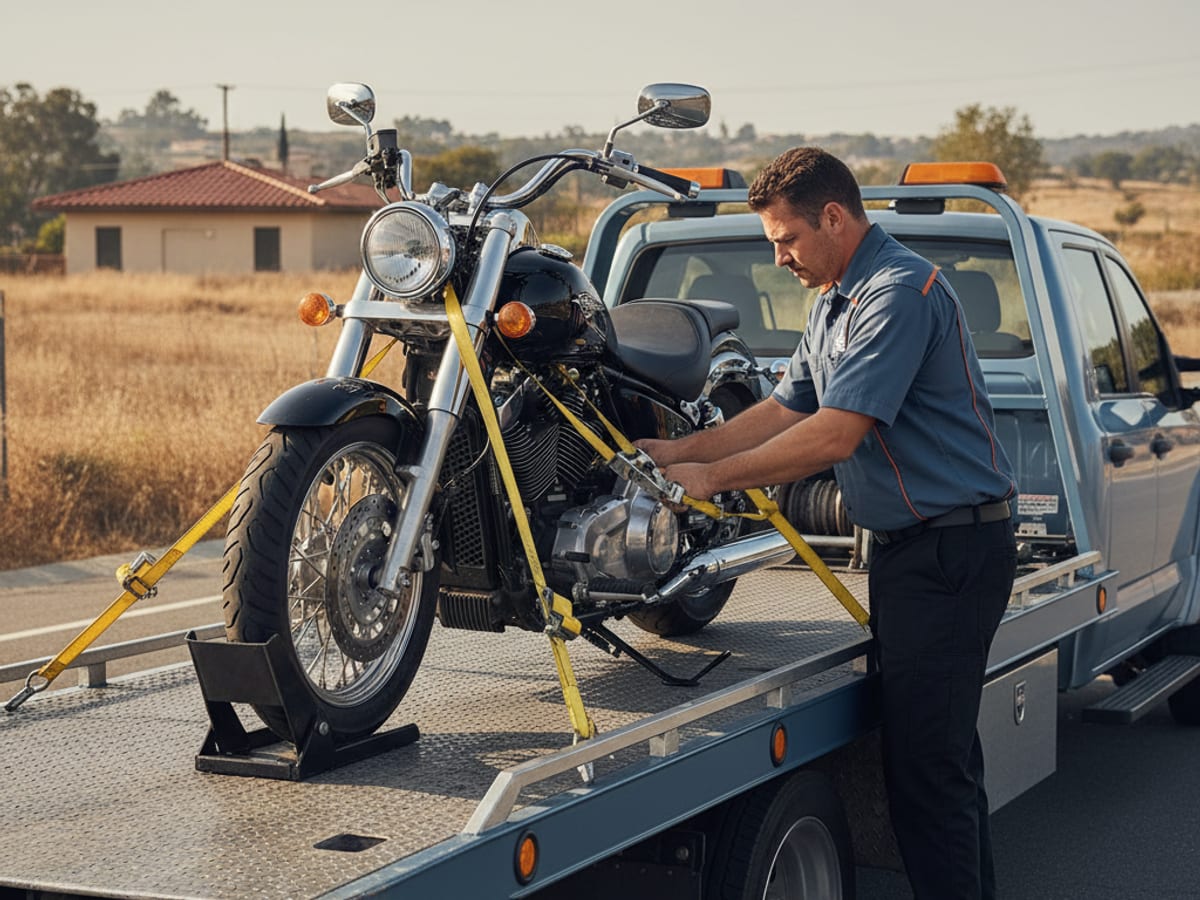
The right rig is a low-deck flatbed, sometimes called a motorcycle-specific carrier, with a deck that drops to ground level or close to it. The operator rides or walks the bike onto the deck and then secures it with soft straps, never a chain. Chains mar the finish, dent the tank, and bend a handlebar on the first hard stop. Soft straps, also called tie-down soft loops, go around solid frame points, not around the handlebars or the front forks.
A good operator carries ratchet straps with coated hooks, wheel chocks sized for motorcycles, and a ramp that grips the deck. They should ask whether the bike is in neutral and whether it rolls freely, because a bike stuck in gear or with a locked rear wheel needs to be winched up rather than ridden on.
Where motorcycle breakdowns cluster in Greater Boston
The metro has a few roads and a few habits that generate steady motorcycle work.
Memorial Drive and the Charles River roads. The river roads from the BU Bridge down to the Museum of Science are weekend-rider territory in season, and the curves and the river-edge pavement catch out-of-shape tires.
Storrow Drive and Memorial Drive low bridges. The Storrow low bridges are the famous box-truck trap, and they catch touring motorcycles too. A rider on a tall bagger who clips a bridge abutment damages the front fairing or the headlight pod and needs a careful pickup.
Route 2 and Route 128. The two commuter highways pull commuters on sport bikes into town, and the rush-hour stop-and-go puts dropped bikes and overheated engines on the shoulder.
The Alewife and Fresh Pond corner. One of the most congested stretches in Massachusetts, and the place where a stalled bike in the wrong lane gets clipped by a car.
The Cape roads through Weymouth and Braintree. Weekend riders heading south on Route 3 run summer heat and summer traffic, and breakdowns cluster on the shoulder before the Braintree Split.
What an operator needs to know to quote the job
To get a real number before dispatch, the operator needs the bike’s details and the situation. Tell them:
- The make, model, and year, and whether it is a cruiser, sport bike, touring bike, scooter, or trike
- Whether the bike rolls and steers under its own power
- Whether it is stuck in gear or has a locked wheel
- Whether it is upright, on a side stand, or laid over
- The pickup spot and where the bike needs to go
- Whether there is room for a flatbed to pull alongside
A bagger laid down on a soft shoulder is a different job from a scooter that will not start in a parking garage. The operator’s quote should reflect that.
What Quick Tow Boston does and does not do
Quick Tow Boston does not own trucks or run a fleet. We connect riders with independent local operators who run low-deck flatbeds with soft straps, and the operator quotes the price before anyone is dispatched. There is no flat rate and no brand price. The Massachusetts DPU maximums under 220 CMR 272.00 cap non-consensual tows, but a consensual motorcycle tow you arrange yourself is priced by the operator and not capped by the state.
How to keep the bill down
Move the bike to a safe spot if you can. A bike on the shoulder of I-93 needs a faster dispatch and a police setup, and both add to the bill. If you can ride or push the bike to an off-ramp, a gas station, or a parking lot, the operator’s job gets shorter and safer.
Tell the operator whether the bike rolls. A bike in gear or with a locked rear wheel needs to be winched up onto the deck, which takes more time and more rigging. A bike that rolls straight is a quick load.
Bring or have the registration and insurance in your gear. A bike that has to be held at a yard for paperwork reasons is a storage clock running.
Frequently asked questions
Does Quick Tow Boston run motorcycle-specific trucks? No. We connect riders with independent local operators who run low-deck flatbeds with soft straps, and the operator quotes the price before dispatch.
Can a regular flatbed tow a motorcycle? Only if the deck drops low enough for the bike to be ridden or walked on. Most production flatbeds sit too high. A motorcycle-specific carrier has a low deck and a ramp.
Why are soft straps required? Chains and hooks dent the tank, bend the handlebars, and scratch the finish on the first hard stop. Soft straps go around solid frame points without marring the bike.
Is there a state cap on a motorcycle tow? The state DPU maximums under 220 CMR 272.00 cap non-consensual tows at $132 for the first five miles and $4.40 a mile after. A consensual motorcycle tow you arrange yourself is priced by the operator and not capped.
When to call us
Call when a motorcycle is down and needs the right rig and the right operator, not a wheel-lift and a guess. Quick Tow Boston connects riders with independent local operators across Greater Boston, and the operator quotes the price before anyone is dispatched. Calls are recorded after a notice. Reach the dispatch line at (857) 858-5057.